
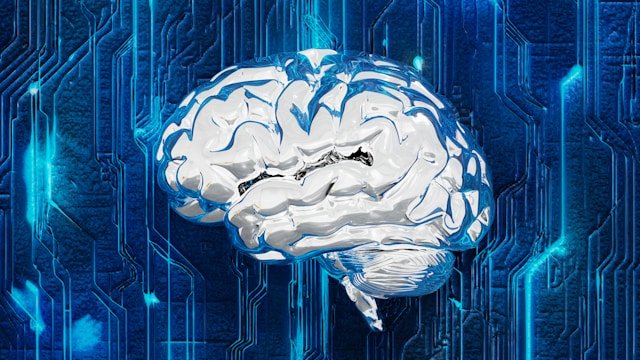
Why Your Brain Invents Problems When Life Is Good
Picture this: You are sitting in total peace. Maybe you just hit a major professional milestone, or perhaps you’re having a flawless dinner with people you love. Suddenly, out of absolutely nowhere, a wave of anxiety hits. Your mind begins inventing hyper-specific, worst-case scenarios, frantically looking for something that could go wrong. It’s frustrating, exhausting, and feels like blatant self-sabotage.
But what if it isn’t?
We live in a self-help culture that aggressively tells us to “just stay positive.” When our brains refuse to cooperate during our happiest moments, we immediately assume something is fundamentally broken inside us. We label ourselves as pathologically anxious or cynically damaged. However, cognitive neuroscience tells a completely different story. That frustrating habit of waiting for the other shoe to drop isn’t a psychological defect at all—it’s actually proof that your brain’s survival hardware is working exactly as it was engineered to do.
The Amygdala and the Evolutionary Trap
The main culprit behind this joy-snatching habit is a tiny, almond-shaped region deeply embedded within the brain’s temporal lobe: the amygdala. Thousands of years ago, the humans who sat around focusing entirely on how beautiful the sunset was didn’t survive very long. The ancestors who lived to pass on their genetic material were the ones who looked at a beautiful landscape and immediately thought, “Where is a predator hiding?”
This biological architecture is known as the Negativity Bias. Our neurological networks are fundamentally wired to react far more intensely to potential threats than to positive rewards. The glitch in modern life is that while the actual, physical dangers of the prehistoric world are largely gone, our brains didn’t get the software update. The amygdala is still running an ancient, hyper-vigilant safety program, constantly scanning your environment for catastrophic errors—even when you’re just trying to enjoy a quiet Saturday afternoon.
🧠 The Neuroscience of “Peace Panic”
When anxiety spikes during an otherwise perfect moment, it helps to understand what is happening under the hood:
- Asymmetrical Processing: Studies in cognitive neuroscience show that neural networks fire much faster and more intensely when processing negative thoughts versus positive ones.
- The Safety Paradox: When life becomes completely calm, your brain sometimes misinterprets the sudden lack of active stress stimulation as a reason to lower its guard, triggering a panic response to force you back into high alertness.
- Background Threat App: The amygdala acts like an unoptimized background app on your smartphone—constantly draining battery power to look for bugs that don’t exist.
How to Stop Fighting Your Hardware
The mistake most of us make is fighting these intrusive thoughts with aggressive, toxic positivity. When you frantically tell yourself, “Stop being anxious, everything is fine,” your brain actually interprets your urgent internal tone as a confirmation of danger, doubling down on its defense mechanisms.
Instead of trying to force your mind to stop worrying, the most effective clinical strategy is a fundamental shift in perspective. Recognize that your mind isn’t trying to ruin your happiness; it’s just trying to keep you alive.
When a random, anxious thought crashes your peaceful moment, acknowledge it without leaning into the drama. Think of it as a well-meaning, overly paranoid bodyguard jumping in front of a non-existent bullet. You can simply thank your brain for looking out for you, and gently redirect your awareness back to reality.
You are not fundamentally negative, and you are not broken. Your brain is simply a hyper-vigilant survival machine that inherently values safety over happiness. Once you realize those phantom worries are just an ancient security system running a routine diagnostic check, you can finally stop letting them dictate your peace of mind.
References & Academic Sources:
- Nature Neuroscience: Neural mechanisms of the negativity bias and threat detection.
- Harvard Medical School / Department of Psychiatry: The role of the amygdala in modern anxiety states.
- Medical Disclaimer: This content is for informational and educational purposes only and does not substitute for professional medical advice, diagnosis, or treatment. Always seek the advice of your physician or other qualified health provider with any questions you may have regarding a psychological or medical condition.*
Photo by Ecliptic Graphic on Unsplash
About Wellcore Weekly: Wellcore Weekly covers health, wellness, nutrition, sleep, fitness, and medical research with timely, easy-to-understand updates for everyday readers.