
The Honest Leak: Why Your Body Refuses to Let You Hide Your Embarrassment
We spend a lot of time perfecting our “poker faces.” We practice firm handshakes, controlled tones of voice, and the kind of forced smiles that get us through awkward dinner parties. But there is one glitch in the human operating system that no amount of acting classes can fix: the blush.
Science confirms that blushing is the only human emotional response that cannot be consciously faked or fully suppressed. When your face turns that tell-tale shade of crimson, you aren’t just feeling an emotion—you are broadcasting it to the world against your will.
The Autonomic Hijack
So, why is your face sabotaging your dignity? You can thank your autonomic nervous system. This is the same system that handles your breathing and your heartbeat—things you don’t have to “think” about doing.
When you feel a sudden surge of self-consciousness, shame, or social anxiety, your body’s “fight or flight” response kicks in. Your veins in the face dilate, allowing a rush of warm blood to the surface. Because this is hardwired into your involuntary circuitry, you can’t “will” it to stop any more than you can will your pupils not to dilate in the dark.
“Blushing is the most peculiar and most human of all expressions,” Charles Darwin famously noted. And he was right—animals might get aggressive or scared, but they don’t get embarrassed.
The Social “Apology”
It feels like a curse when it happens, but psychologists argue that blushing is actually a vital social lubricant. In a world full of curated social media feeds and “fake it ’til you make it” attitudes, the blush is a rare signal of genuine emotional exposure.
- It’s a non-verbal apology: When you blush after a mistake, it signals to others that you recognize the social norm you just broke.
- It builds trust: We are biologically programmed to trust people who blush more than those who stay cool as a cucumber. Why? Because a blusher can’t hide their true feelings.
- It’s a sign of empathy: People who are prone to blushing are often rated as more prosocial and empathetic.
Can You Stop It?
The short answer is: not really. In fact, the more you think about stopping a blush, the more you fuel the anxiety that causes it—a phenomenon known as “erythrophobia” (the fear of blushing).
Instead of fighting it, the best “health hack” is radical acceptance. Acknowledging the blush out loud—“Well, now my face is bright red”—actually diffuses the sympathetic nervous system’s spike and helps the redness fade faster than if you tried to hide behind your hair.
The Human Honesty Scale
| Expression | Can it be faked? | Level of Control |
| Smile | Yes (The “Pan Am” smile) | High |
| Eye Contact | Yes | High |
| Laughter | Yes | Moderate |
| Blushing | No | Zero |
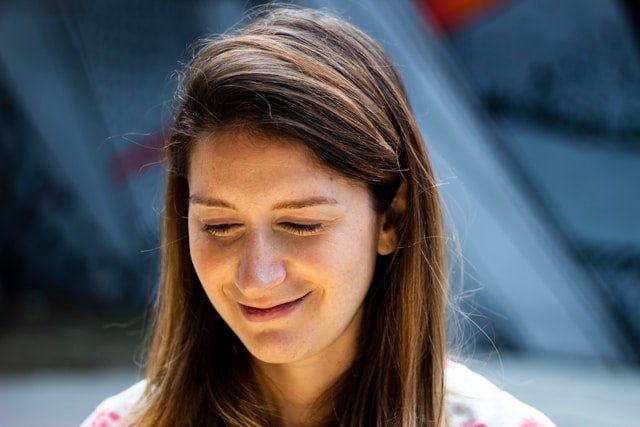
Photo by Salvador Escalante on Unsplash
About Wellcore Weekly: Wellcore Weekly covers health, wellness, nutrition, sleep, fitness, and medical research with timely, easy-to-understand updates for everyday readers.