
The Relaxing Habit That’s Actually a Biological Alarm Clock
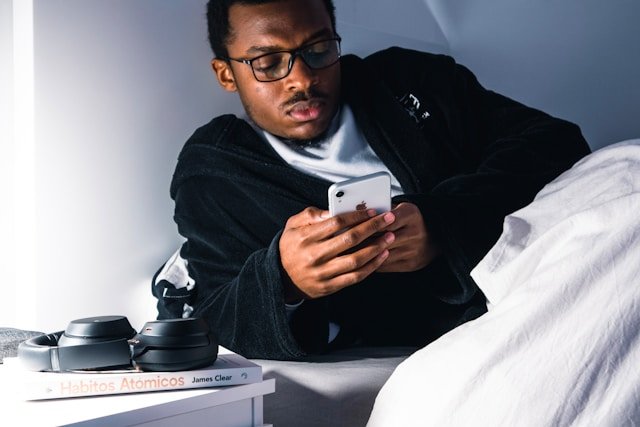
We’ve all done it. You crawl into bed, exhausted, but decide to spend “just five minutes” checking the news or scrolling through social media. An hour later, you’re still wide awake, wondering why your brain won’t shut off.
Here is the cold, hard truth: That smartphone in your hand isn’t helping you wind down. It’s actually acting as a high-intensity biological stimulant.
In fact, research from institutions like Harvard Medical School has shown that the blue light emitted by our devices is so effective at signaling alertness that it can rival—or even exceed—the stimulating impact of drinking two cups of black coffee.
1. The Melatonin Meltdown
Our bodies rely on a very delicate internal clock called the circadian rhythm. As the sun goes down, your brain is supposed to start pumping out melatonin, the hormone that tells every cell in your body, “Hey, it’s time to rest.”
Blue light is the natural enemy of melatonin. Because blue light wavelengths are so similar to morning sunlight, they trick your brain into thinking it’s 10:00 AM.
- The Signal: Blue light hits your retinas and sends a “STAY ALERT” signal to the brain.
- The Delay: This doesn’t just make it harder to fall asleep; it physically pushes back your body’s natural sleep-onset window.
2. The Quality Crisis: Shortchanging Your Deep Sleep
Falling asleep is only half the battle. The real magic of sleep happens in the Deep Sleep and REM phases, where your body repairs tissues, boosts the immune system, and clears out mental “clutter.”
Persistent nighttime screen use has been shown to shorten these essential phases. Even if you manage to pass out after an hour of scrolling, the quality of your rest is compromised. You wake up feeling groggy, “foggy,” and reach for—you guessed it—more coffee. It’s a vicious cycle that starts and ends with a screen.
3. Taking Back Your Night
I’m not going to tell you to throw your phone in a drawer and live by candlelight. We live in a digital world. But if you want your brain to function at its peak, you need a “Digital Sunset.”
- The 60-Minute Rule: Aim to put the phone away at least one hour before you want to be asleep. Give your melatonin a fighting chance to kick in.
- Analog Alternatives: Swap the scroll for a physical book or a podcast. Audio content doesn’t have the same “awakening” effect as blue light.
- Shift Your Settings: If you must use a device, use “Night Shift” or “Blue Light Filter” modes. It’s not a perfect fix, but it’s a necessary damage-control measure.
My Take: We treat our phone chargers better than our own brains. We make sure our devices hit 100% every night, yet we deny ourselves the very “recharge” we need to handle the next day. It’s time to prioritize the person holding the phone over the app inside it.
The Bottom Line
Science is clear: Blue light exposure is a major disruptor of healthy sleep rhythms. If you’re struggling with fatigue, mood swings, or brain fog, the solution might not be a better supplement—it might just be a darker bedroom.
About Wellcore Weekly: Wellcore Weekly covers health, wellness, nutrition, sleep, fitness, and medical research with timely, easy-to-understand updates for everyday readers.