
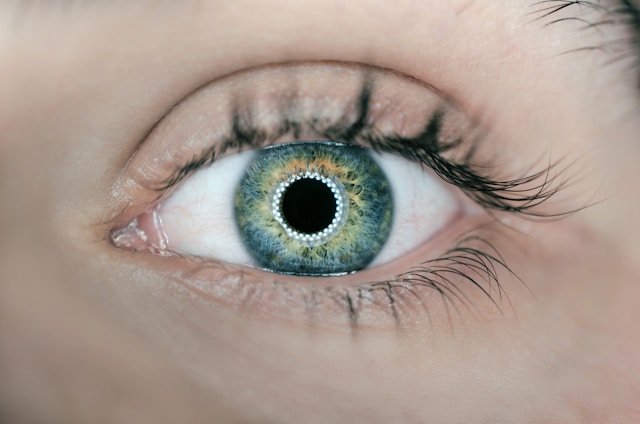
The Anatomy of Rarity The Structural Physics and Genetic Blueprints Behind True Green Eyes
Human eye color is frequently discussed as if it were a simple trait inherited from a basic school biology grid. We tend to view the iris as a canvas painted with standard blue, brown, or green pigments. However, clinical research from institutions like the University of Utah’s Genetics Department reveals a far more fascinating reality: true green eyes do not actually contain green pigment at all.
Instead, green eyes are the result of a precise genetic configuration combined with an elegant optical illusion. With only an estimated 2% of the global population possessing this trait, understanding the mechanics of green irises requires a deeper look into human anatomy, evolutionary genetics, and light scattering behavior.
🔬 The Dual-Layer Anatomy of the Iris
To understand how green eyes manifest, one must look at the structural architecture of the iris, which consists of two primary layers: the posterior epithelium and the anterior stroma.
While the back layer (the epithelium) is consistently heavily pigmented across almost all human eyes, the front layer (the stroma) dictates the visible color based on two distinct variables: cellular density and melanin concentration.
                  [Cross-Section of the Human Iris]
                                 │
         ┌───────────────────────┴───────────────────────┐
         ▼                                               ▼
   The Stroma (Anterior)                       Epithelium (Posterior)
   • Low melanin levels                        • Highly pigmented in all eyes
   • Rayleigh scattering occurs                • Absorbs residual light
The Interplay of Lipochrome and Light
In brown eyes, a high concentration of eumelanin in the stroma absorbs incoming light wavelengths, reflecting a deep brown hue back to the viewer. In true green eyes, the biological formula shifts dramatically:
- Low Melanin Baseline: The stroma contains an exceptionally low baseline of standard dark melanin.
- The Lipochrome Factor: Instead, it features a sparse distribution of a yellowish-green ocular pigment called pheomelanin (historically referred to as lipochrome).
- Rayleigh Scattering: Because the stroma lacks heavy dark pigment, incoming short-wavelength light hits the cellular structures and scatters. This is the exact same physical phenomenon—known as Rayleigh scattering—that makes the Earth’s sky appear blue.
When the naturally blue-scattered light reflects back through the thin layer of yellowish lipochrome pigment, the wavelengths blend. The result is the vivid, shifting green appearance characteristic of this rare phenotype.
| Eye Color Phenotype | Stromal Melanin Density | Primary Optical Phenomenon | Predominant Reflected Wavelengths |
| Brown | High Concentration | Direct Light Absorption | 600–700 nm (Brown/Red Spectrum) |
| Blue | Minimal/Zero Pigment | Maximum Rayleigh Scattering | 450–495 nm (Blue Spectrum) |
| True Green | Very Low Concentration | Rayleigh Scattering + Lipochrome Filter | 495–570 nm (Green Spectrum) |
🧬 The Polygenic Inheritance Landscape
For decades, public education taught that eye color was determined by a simplistic, single-gene dominant/recessive Mendelian model. Modern molecular genetics has thoroughly debunked this, proving that eye color is a polygenic trait influenced by an interconnected matrix of at least 16 different genes.
The two primary genetic drivers are located on chromosome 15: the OCA2 and HERC2 genes.
- The HERC2 Switch: The HERC2 gene acts as a master switch that regulates the expression of the OCA2 gene. OCA2 is responsible for encoding P-protein, which is integral to the maturation of melanosomes (the cellular structures that produce and store melanin).
- The Green Variant: In individuals with green eyes, specific single-nucleotide polymorphisms (SNPs) within these gene complexes partially turn down the melanin production pipeline. It reduces output enough to prevent the eye from becoming brown, but leaves just enough activity to prevent it from dropping into the clear, unpigmented blue spectrum.
⚖️ Clinical Considerations: High Light Sensitivity
The Clinical Reality: Protection Over Aesthetics
While green eyes are celebrated for their striking visual aesthetic and rarity, they come with definitive physiological tradeoffs that medical professionals must highlight. Because a green iris possesses significantly less melanin than a brown eye, its internal structures have far less natural protection against high-energy visible (HEV) blue light and ultraviolet (UV) radiation.
Ophthalmic data consistently indicates that individuals with light iris phenotypes—specifically blue and green—experience higher baseline rates of photo-aversion (light sensitivity) and face elevated statistical risks for developing conditions like uveal melanoma and macular degeneration later in life. Melanin functions as a natural intraocular shield; when that shield is thinned by genetics, the delicate macular tissues of the retina absorb a higher cumulative dose of radiation over a lifetime.
Therefore, from a preventative healthcare perspective, the clinical recommendation for the 2% of individuals with green eyes remains strict: the consistent use of UV-400 rated sunglasses is not an aesthetic choice, but a structural necessity to preserve long-term retinal health.
Photo by Arteum.ro on Unsplash
About Wellcore Weekly: Wellcore Weekly covers health, wellness, nutrition, sleep, fitness, and medical research with timely, easy-to-understand updates for everyday readers.