
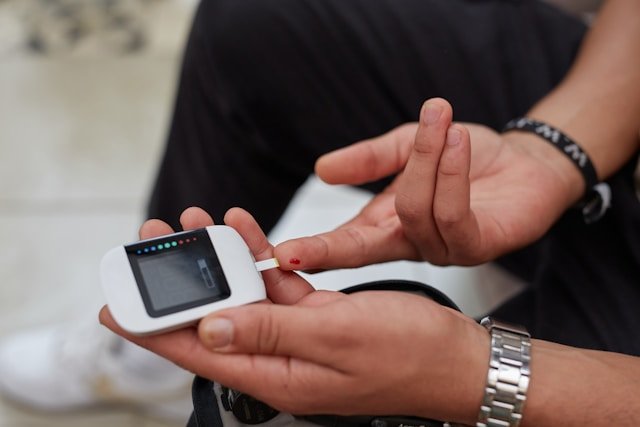
Stanford Just Cured Type 1 Diabetes in Mice — No Insulin, No Drugs, No Relapse
A dual transplant that rewires the immune system eliminated the disease entirely — in every animal treated. Here’s why this one feels different.
If you’ve followed medical news for any amount of time, you’ve learned to be a little skeptical of “breakthrough” headlines. So let’s be specific about what actually happened at Stanford — because this one is genuinely hard to dismiss.
Researchers gave mice Type 1 diabetes — the kind driven by a misfiring immune system, just like in humans — and then cured them. Not managed. Not slowed. Cured. Every single mouse in the treatment group. 19 out of 19 predisposed animals never developed the disease. 9 out of 9 animals already living with long-standing T1D had it fully reversed. No insulin required afterward. No immune-suppressing medication. No graft-versus-host disease. For six months — the full length of the study — the animals were free.
The study was published in November 2025 in the Journal of Clinical Investigation by a team at Stanford Medicine, led by developmental biologist Seung K. Kim. It builds on years of foundational research — but this version tackled something the earlier work hadn’t: autoimmune diabetes, where the immune system isn’t just rejecting a transplant, it’s the actual cause of the disease in the first place.
“We need to not only replace the islets that have been lost but also reset the recipient’s immune system to prevent ongoing islet cell destruction. Creating a hybrid immune system accomplishes both goals.”
— Dr. Seung K. Kim, Stanford Medicine
The problem with Type 1 diabetes — and why it’s been so hard to crack
Type 1 diabetes isn’t a lifestyle disease and it isn’t about eating too much sugar. It’s the immune system going rogue — mistakenly identifying the pancreas’s insulin-producing beta cells as threats and destroying them. Once they’re gone, the body can no longer regulate blood sugar on its own. Insulin injections or pumps take over that job, for life.
Doctors have known for a while that transplanting healthy islet cells from a donor pancreas can restore insulin production. The catch has always been twofold: the recipient’s immune system will try to reject the foreign cells (standard transplant problem), and the same autoimmune malfunction that caused the disease in the first place will destroy the new cells too. That’s a brutal double-problem to solve — and it’s why most T1D patients can’t benefit from islet transplants without committing to lifelong immunosuppression, with all its risks: infections, cancer susceptibility, organ damage.
What Stanford actually did
The Stanford team’s approach is elegant in a way that good science often is: instead of just transplanting islet cells and fighting the immune rejection afterward, they reprogrammed the immune system first.
Before any transplant, the mice received a preparatory regimen designed to gently open space in the bone marrow for new cells — using an antibody that targets a protein called CD117, T-cell depleting antibodies, a drug called baricitinib (already prescribed for rheumatoid arthritis and other autoimmune conditions), and a low dose of radiation. No heavy chemotherapy. No harsh conditioning that leaves the immune system in ruins.
Then came the dual transplant: blood-forming stem cells and islet cells, both from a donor with a mismatched immune profile. What emerged was something remarkable — a hybrid immune system made up of cells from both the donor and the recipient. This chimeric immune system recognized the transplanted islets as “self,” ended the autoimmune attack, and let the new beta cells do their job.
BY THE NUMBERS
19/19
predisposed mice — disease prevented
9/9
diabetic mice — disease fully reversed
0
cases of graft-vs-host disease or rejection
Why this feels more serious than the usual “mice cured” story
Medical science has cured diabetes in mice before. More than once, actually. The graveyard of promising mouse studies that never translated to humans is long. So why pay attention to this one?
A few reasons. First, the tools used here — the CD117 antibody, baricitinib, low-dose radiation — are already in clinical use. Baricitinib is already FDA-approved. Anti-CD117 therapies are in human trials for blood disorders. This isn’t a treatment built around some exotic new molecule that will take a decade to approve. The scaffolding is already there.
Second, the approach doesn’t just address one part of the problem — it addresses all of it at once. It stops the autoimmune attack, eliminates the need for systemic immune suppression, and replaces the damaged cells. That’s not incremental progress. That’s a different category of intervention entirely.
Third — and this matters more than it might seem — the researchers specifically used mice with the spontaneous autoimmune version of the disease, not mice where diabetes was artificially induced with toxins. That’s a much closer model to what happens in human T1D. It’s a harder problem, and they solved it cleanly.
What happens next — and what to actually expect
The researchers are open about the fact that human trials are the logical next step. That’s not spin — the clinical portability of the tools they used makes it a realistic statement rather than a hopeful one. That said, the path from a clean mouse study to an approved human therapy is long, expensive, and full of surprises. If human trials begin in the next few years and go well, we’re probably still talking about a decade before this would be widely available.
There are also open questions. Donor matching, scaling the islet supply (stem cell-derived beta cells could help here — the paper mentions this as a future direction), long-term durability beyond six months, and how the approach works across a diverse human population are all things that need to be worked out.
But here’s what’s true right now: a team at Stanford just demonstrated that Type 1 diabetes — an autoimmune disease that currently has no cure and demands lifelong management — can be permanently eliminated in a living animal using an immune system reset. Not suppressed. Not slowed. Gone. And they did it without toxic conditioning, without rejection, and without any ongoing medication.
For the 8.4 million Americans living with T1D — many of them children — that’s not just a promising headline. It’s the kind of result that earns real attention.
Source: Bhagchandani et al., “Curing autoimmune diabetes in mice with islet and hematopoietic cell transplantation after CD117 antibody-based conditioning.” Journal of Clinical Investigation, November 18, 2025. DOI: 10.1172/JCI190034
Photo by Sweet Life on Unsplash
About Wellcore Weekly: Wellcore Weekly covers health, wellness, nutrition, sleep, fitness, and medical research with timely, easy-to-understand updates for everyday readers.