
Medical History Rewritten When Alzheimer’s Strikes at 19
For decades, Alzheimer’s has been the shadow that looms over our golden years. We’ve been told that if it hits early, it’s because of a “glitch” in your DNA—a rare genetic curse passed down through families.
But a 19-year-old in China has just shattered that narrative, becoming the youngest person ever diagnosed with the condition. His case isn’t just a medical anomaly; it is a wake-up call that the disease may be far more mysterious than we ever imagined.
The Slow Fade of a Young Mind
The heartbreak began when he was just 17. It started with subtle things—trouble focusing in class and a strange new difficulty with reading. Within two years, the “brain fog” turned into a total blackout. By the time he was 19, his memory scores were 80% lower than other teenagers his age. He couldn’t remember what he’d eaten for dinner or where he’d put his schoolbooks.
The Mystery: No Genetic “Smoking Gun”
Usually, when doctors see a patient under 65 with Alzheimer’s, they look for specific genetic mutations. In almost every “early-onset” case, there is a clear hereditary link.
This case was different:
- No Genetic Mutations: Tests for the “usual suspects” (like the PSEN1 or APP genes) came back negative.
- No Family History: There was no record of the disease in his recent lineage.
- Physical Evidence: Despite his age, his brain scans showed clear shrinkage in the hippocampus (the memory hub), and his spinal fluid was filled with the classic toxic biomarkers of the disease.
This is what has the scientific community rattled. If it isn’t genetics, and it isn’t “old age,” what triggered it?
A Challenging New Frontier in Neurology
This discovery is forcing a massive re-evaluation of how we view cognitive decline. For a long time, we’ve treated Alzheimer’s as a wear-and-tear issue or a genetic inevitability. This 19-year-old’s diagnosis suggests there are unknown biological pathways—hidden triggers in our environment, diet, or internal chemistry—that can flip the switch on dementia decades before we expect it.
“We need to stop thinking of Alzheimer’s as an ‘old person’s disease’ and start looking at it as a complex biological process that doesn’t care what your birth certificate says,” says the underlying sentiment among researchers.
What Should You Watch For?
While this case is incredibly rare, it highlights the importance of brain health at every age. Neurologists are using this “medical first” to remind us that persistent memory issues in young people shouldn’t just be brushed off as “stress” or “lack of sleep.”
Red Flags to Never Ignore:
- Sudden Reading Difficulties: Losing your place or failing to comprehend simple text.
- Significant Recall Gaps: Forgetting major events that happened just hours ago.
- Disorientation: Getting lost in familiar places or losing track of the date/season.
This teenager’s story is a tragedy, but his contribution to science might be the key to a cure. By studying how the disease manifested in a brain without “bad genes,” researchers may finally find the missing link in the Alzheimer’s puzzle. It’s a somber reminder that our minds are fragile—and that we still have so much to learn about the most complex organ in the body.
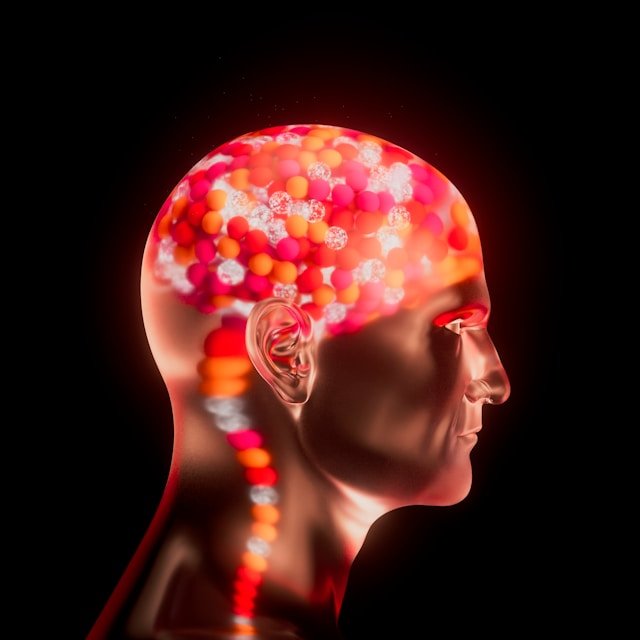
Photo by Igor Omilaev on Unsplash
About Wellcore Weekly: Wellcore Weekly covers health, wellness, nutrition, sleep, fitness, and medical research with timely, easy-to-understand updates for everyday readers.