
Biology Just Broke Its Own Most Sacred Rule
BREAKING SCIENCE GENETICS SYNTHETIC BIOLOGY·
Well Core Weekly Editorial April 26, 2026 · 5 min read
For seventy years, one idea sat at the very foundation of molecular biology: DNA begets DNA. You copy, you don’t create. A discovery published in Science this year just turned that on its head — and the scientific community is still catching its breath.
There are a handful of rules in biology so fundamental that questioning them feels almost rude. The central dogma — the idea that genetic information flows in one direction, from DNA to RNA to protein — has been one of those rules since Francis Crick laid it out in 1958. It wasn’t just a theory. It was the operating manual for all of life as we understood it. DNA copies DNA. Proteins are the product of that process, not a source of new genetic code. That direction of travel was considered settled, foundational, essentially non-negotiable.
Until now. Researchers studying bacterial immune systems have stumbled onto something that doesn’t fit that framework at all — and the more they examine it, the more extraordinary it looks. A mechanism called DRT3, found in certain bacteria, can build brand-new DNA sequences without reading any existing DNA template whatsoever. Instead, a specialized enzyme uses its own protein structure as the blueprint. The information flows backwards — from protein to DNA — in a direction that was supposed to be impossible.
WHY THIS IS SUCH A BIG DEAL — IN PLAIN ENGLISH
To understand why this discovery is getting scientists genuinely excited, it helps to have a feel for just how central the “copy from a template” rule has been to everything we know about genetics. Every DNA replication event you’ve ever learned about — in school, in textbooks, in every CRISPR explainer ever written — assumes a template. You don’t write new genetic information, you read existing information and reproduce it. That constraint has shaped how we think about evolution, heredity, disease, and genetic engineering for the better part of a century.
DRT3 breaks that constraint. The enzyme at the heart of this system — described in a 2026 paper in Science by R.F. Service — doesn’t look for a strand of DNA to copy. It looks inward, to its own protein architecture, and uses that three-dimensional structure as instructions for assembling a new DNA sequence. It is, in effect, writing rather than copying. The analogy would be a printer that doesn’t need a document — it generates the text from the machine itself.
Every genetic tool we’ve built — including CRISPR — came from understanding how bacteria defend themselves. DRT3 is the next chapter in that story, and nobody has read it yet.— WELLCORE WEEKLY
A WEAPON AGAINST VIRUSES — AND A HINT AT SOMETHING BIGGER
So why would bacteria evolve something this strange? The most likely answer, researchers believe, is warfare — the endless microscopic arms race between bacteria and the viruses (called bacteriophages, or phages) that try to infect and destroy them. Bacteria have been evolving increasingly creative defenses against phages for billions of years. CRISPR — yes, the same gene-editing technology that’s been making headlines for the last decade — is itself a bacterial immune system that scientists repurposed into one of the most powerful biotechnology tools ever developed.
DRT3 appears to be another line in that same defense playbook. By generating novel DNA sequences without a template, bacteria may be able to interfere with viral replication in ways that phages haven’t evolved to counter. The exact mechanism is still being worked out — the researchers are candid about that — but the defensive logic makes sense. If you can write new genetic code that a virus has never encountered, you have a surprise it can’t prepare for.
THE CENTRAL DOGMA — AND WHAT DRT3 CHANGES
OLD RULEDNA → RNA → Protein. Information always flows from genetic code outward. DNA copies from DNA using an existing template strand.
EXCEPTION 1Retroviruses (like HIV) use reverse transcriptase — RNA → DNA. Known since the 1970s, it bent the rule but didn’t fully break it.
DRT3 (2026)Protein → DNA. No template of any kind. An enzyme uses its own 3D protein structure to synthesize new genetic sequences from scratch. First known mechanism of its kind.
ADVERTISEMENT
THE CRISPR PARALLEL — AND WHY IT MATTERS FOR THE FUTURE
The history of biotechnology is, to a remarkable degree, a history of scientists watching bacteria do something weird and then figuring out how to steal it. Restriction enzymes — the molecular scissors used in early genetic engineering — came from bacterial immune systems. PCR, the technique behind every COVID test ever administered, relied on enzymes from heat-resistant bacteria found in hot springs. CRISPR, which may eventually cure genetic diseases, is a bacterial memory system for fighting viruses.
DRT3 fits squarely into that tradition. If you can understand how this enzyme uses protein structure to write new DNA, you have — at least in theory — a template-free DNA synthesis tool. The implications for synthetic biology are hard to overstate. Right now, creating custom DNA sequences is painstaking and constrained by our dependence on template-based chemistry. A protein-directed synthesis approach could, eventually, allow researchers to write genetic code in fundamentally new ways — designing novel biomaterials, custom genetic circuits, or therapeutic sequences that can’t be easily built with current tools.
It’s worth being honest about the timeline here: we are nowhere near any of those applications. This is a fundamental discovery about a mechanism that scientists are still working to understand at the basic level. The road from “we found this in bacteria” to “here’s a genetic engineering tool” took about a decade with CRISPR, and that was with enormous global investment and urgency. DRT3 is earlier than that. But the fact that the parallel exists — and that experts are already drawing it — tells you how seriously the scientific community is taking this.
The road from bacterial curiosity to world-changing tool has been travelled before. CRISPR took a decade. DRT3 is earlier than that — but the map looks familiar.— WELLCORE WEEKLY
WHAT IT ACTUALLY MEANS THAT A “LAW” JUST GOT REWRITTEN
There’s something worth sitting with here beyond the practical applications. Science communicators — and frankly, science education — have a tendency to present biological rules as more absolute than they actually are. The central dogma was never really a dogma in the religious sense; Crick himself used the word somewhat loosely. But it has functioned as one in practice, shaping assumptions so deeply embedded that many researchers simply didn’t look for exceptions.
DRT3 is a reminder that biology is older, stranger, and more inventive than our models of it. Bacteria have been running evolutionary experiments for 3.5 billion years. They’ve had a very long time to find solutions to problems that our frameworks haven’t even imagined yet. Every few years, one of those solutions surfaces in a lab — and it turns out the rule we thought was unbreakable was just a rule we hadn’t broken yet.
That’s not unsettling. It’s one of the most exciting things about being alive at this particular moment in science. The textbook is still being written — and occasionally, a bacterium rewrites a chapter for us.
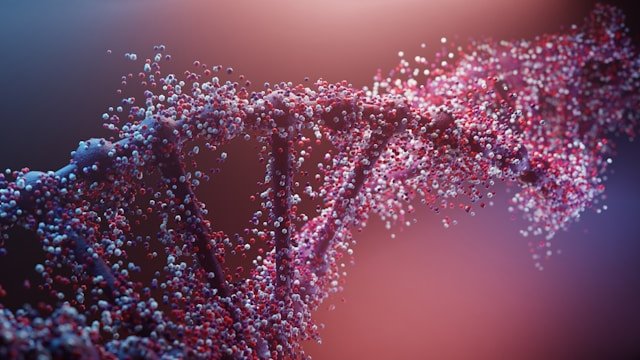
Photo by MJH SHIKDER on Unsplash
About Wellcore Weekly: Wellcore Weekly covers health, wellness, nutrition, sleep, fitness, and medical research with timely, easy-to-understand updates for everyday readers.