
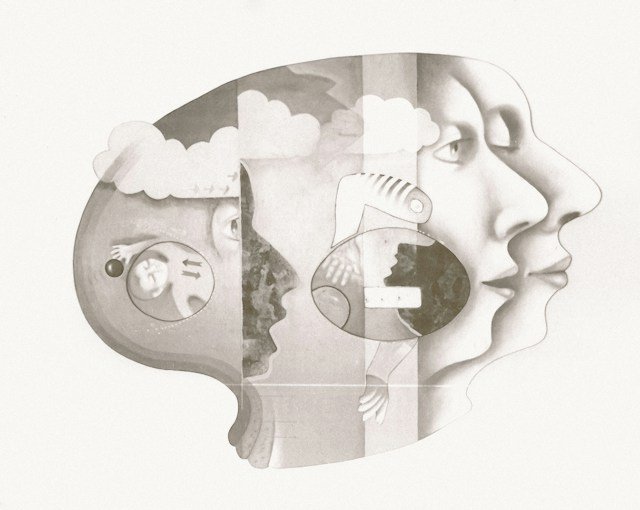
Breaking the Hold of Trauma What New Memory Research Could Mean for PTSD
The New Science of Traumatic Memories—and Why Researchers Are Looking for a Better Way to Treat PTSD
Scientists are learning more about how traumatic memories are stored and updated in the brain. Could that eventually lead to more precise treatments for PTSD?
Traumatic memories can remain powerful long after danger has passed. New neuroscience research is helping scientists understand the brain pathways involved—and whether those memories can eventually be changed without affecting other important memories.
A frightening experience does not necessarily stay in the past just because the event is over.
For people living with post-traumatic stress disorder (PTSD), reminders of an earlier event can continue to trigger intense emotional and physical reactions. A sound, smell, place or situation may suddenly bring the past back into the present.
That has led researchers to ask a difficult but important question: Can a traumatic memory be changed without erasing the rest of a person’s memories?
Scientists cannot currently erase traumatic memories in people, and there is no approved treatment that selectively removes a painful memory from the brain. But research into memory formation, reconsolidation and neural pathways is opening new possibilities for future PTSD treatments.
Why traumatic memories can be so persistent
Memory is not like a video recording stored permanently in one location.
When we experience an event, the brain processes information across several interconnected regions. The hippocampus plays an important role in forming and organizing memories, while areas involved in emotion and threat detection help determine how strongly an experience is remembered.
During a highly stressful or frightening event, these systems can behave differently from the way they do during an ordinary experience.
This can help explain why traumatic memories may feel unusually vivid or emotionally powerful. Instead of simply remembering that something happened, a person may experience a strong sense of threat when encountering something that reminds them of it.
PTSD is much more complicated than having one unusually strong memory, however. It involves changes in emotional processing, avoidance, arousal and the way the brain responds to reminders of trauma.
Researchers are studying whether memories can be updated
One of the most interesting areas of neuroscience is called memory reconsolidation.
The basic idea is that when an established memory is recalled, it may temporarily become more changeable before being stored again. Researchers are investigating whether this window could eventually be used to help modify the emotional response associated with a traumatic memory.
This does not mean scientists can simply delete a memory.
Instead, the goal is closer to changing the way the brain responds to the memory.
For example, a person may continue to know that a traumatic event happened while gradually developing a less overwhelming response when remembering it. That distinction is important because successful PTSD treatment is generally about restoring safety and functioning—not removing a person’s personal history.
What neural pathway research is teaching scientists
Researchers at institutions including Kyoto University have contributed to the broader effort to understand how memories and emotional responses are represented within neural circuits.
Much of this work is experimental. Scientists use laboratory models and increasingly sophisticated methods to identify which groups of neurons become active during learning, memory formation and recall.
These studies are helping researchers ask more precise questions.
Which neurons are involved in storing a particular memory? What happens when that memory is recalled? Which pathways control fear responses? Can the emotional component of a memory be modified while leaving other information intact?
Answers to those questions could eventually help researchers develop more targeted approaches to conditions such as PTSD.
But an important caution is necessary: findings from animal or laboratory studies do not automatically become human treatments.
The human brain is extraordinarily complex, and a technique that changes a memory circuit in an experimental model may behave very differently in people.
Why this research matters for PTSD
PTSD already has effective treatments, including trauma-focused psychotherapies and certain medications. For many people, these approaches can significantly reduce symptoms.
But treatment does not work equally well for everyone.
Some people continue to experience substantial symptoms despite receiving appropriate care. Others may struggle to access specialized treatment or may find particular therapies difficult to tolerate.
That is why researchers continue looking for new approaches.
Future treatments might combine established psychotherapy with interventions designed to influence the biological processes involved in fear learning and memory updating.
Rather than trying to erase the past, the objective would be to help the brain learn that the danger is no longer present.
The ethical questions are just as important
The possibility of modifying memories also raises questions that scientists cannot answer with biology alone.
Memory is closely connected to identity, relationships and personal experience. A technology capable of deliberately changing memories would therefore require careful ethical boundaries.
Researchers would need to determine what should be changed, who should make that decision and how to prevent inappropriate use.
There is also a major difference between reducing the distress associated with a traumatic memory and removing the factual memory itself.
For mental-health care, the former may be far more meaningful.
A person does not necessarily need to forget what happened. They may need their brain and body to stop responding as though the danger is happening again.
What people with PTSD should know today
For now, memory-modification research remains experimental. People should not interpret emerging neuroscience as evidence that an experimental procedure can erase trauma or replace established PTSD treatment.
If traumatic memories are interfering with sleep, relationships, work, school or everyday life, speaking with a qualified mental-health professional is a much more practical step.
PTSD is treatable, and improvement does not require forgetting what happened.
The most promising lesson from modern memory research may therefore be less dramatic than the idea of erasing a traumatic memory—but potentially more important.
Scientists are learning that memories are not necessarily as fixed as we once thought. With better understanding of how the brain stores, retrieves and updates emotional experiences, future treatments may become more precise.
The goal would not be to erase someone’s past.
It would be to help the brain understand that the past is no longer happening now.
Photo by Wiki Sinaloa on Unsplash
About Wellcore Weekly: Wellcore Weekly covers health, wellness, nutrition, sleep, fitness, and medical research with timely, easy-to-understand updates for everyday readers.

I believe that PTSD cannot be reversed….I am 67 years old….have had PTSD since a child…..have taken about every pharmaceutical drug to “cure” it….been to MANY psychiatrists and so far…….no help…..waste of time and money, when the one licensed to help has NO IDEA what I went through! A lot of “advice” and so called “remedies” from years of guessing what to prescribe and so called “solutions”…..I have lost out on life, family, friends, jobs, opportunities, etc. Funny how we feel “bad” and give the ones that eat too much, drink too much, take drugs etc…excuses, compassion and remedies……yet, those of us with mental health issues……brought on by abuse, neglect, verbal abuse, abandonedment…..NOT BROUGHT ON BY OURSELVES……we are left to suffer…..as NO ONE UNDERSTANDS…..not even ourselves as why we do, say, act, etc…..and are triggered by the unknown…..and are left in isolation