
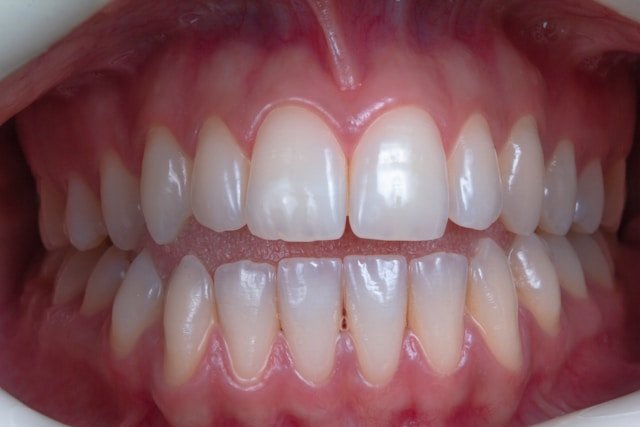
The End of Dentures? The Groundbreaking Science Behind Natural Tooth Regrowth
Let’s be honest: nobody actually wants a titanium screw drilled into their jawbone, nor does anyone look forward to the day they have to keep their teeth in a glass on the nightstand. For generations, losing a permanent tooth meant crossing a biological point of no return. You either paid thousands of dollars for a synthetic implant, or you settled for dentures and watched your favorite foods slowly become a safety hazard.
But a quiet medical revolution brewing in Japan is about to change how we think about aging, anatomy, and oral health forever.
Researchers at Kyoto University and the pioneering startup Toregem BioPharma have advanced a drug into human clinical trials that doesn’t just patch up dental decay—it actually regrows human teeth.
The “Third Set” of Teeth You Didn’t Know You Had
As humans, we get two biological chances at a smile: our baby teeth, followed by our permanent adult set. But biologically speaking, the story doesn’t actually end there.
Deep within our jawbones, we carry a hidden evolutionary remnant: a latent “third dentition” of dormant tooth buds. Under normal circumstances, these buds are kept permanently asleep by a specific biological brake—a protein called USAG-1 (Uterine Sensitization-Associated Gene-1).
The genius of this new treatment (specifically an antibody drug called TRG-035) is that it functions as a targeted off-switch for that exact protein. By blocking USAG-1, the drug releases the biological brake, allowing the body’s natural signaling pathways to wake up those dormant buds and construct a brand-new, fully functional tooth from scratch.
From Lab Mice to Human Patients
If this sounds like science fiction, the preclinical data says otherwise. Researchers have already successfully used this method to grow entirely new teeth in mice, ferrets, and dogs—all without any significant adverse side effects. Because a ferret’s dental pattern looks remarkably similar to our own, the leap to human testing was the next logical, albeit massive, step.
The clinical trials, which began their first human phase at Kyoto University Hospital, are taking a highly strategic approach:
- Phase 1: Testing the safety and dosage of the drug on healthy adult males who are missing at least one molar.
- Phase 2: Shifting focus to children with congenital tooth agenesis (a genetic condition where some or all adult teeth fail to form).
- The Ultimate Goal: Making the treatment commercially available to the general public by 2030 for anyone who has lost teeth to injury, decay, or aging.
Why This is the Ultimate Paradigm Shift
The dental industry has spent decades perfecting artificial substitutes. Porcelain crowns, titanium implants, and acrylic bridges have become multi-billion-dollar staples of modern medicine. But as advanced as a titanium implant is, it will never truly replicate the complex biological network of nerves, blood vessels, and periodontal ligaments that anchor a real tooth to your jaw.
This drug represents a complete philosophical shift in medicine: moving away from prosthetics and moving toward true regeneration.
While early internet rumors have thrown around exaggerated claims of “growing teeth in just 4 days” (in reality, biological tissue regeneration takes time to safely mature and align), the underlying truth remains staggeringly impressive. We are looking at a future where your dentist might write you a prescription to grow a new molar instead of scheduling you for oral surgery.
There are still major hurdles to clear. Scientists need to ensure these new teeth erupt in the correct alignment, connect perfectly to the nervous system, and don’t trigger unintended bone growth elsewhere. It will also likely be an expensive, premium luxury when it first hits the market around 2030.
But the door has been opened. The human body has always possessed the blueprint to rebuild itself—we just finally figured out how to read the instructions.
Photo by Ozkan Guner on Unsplash
About Wellcore Weekly: Wellcore Weekly covers health, wellness, nutrition, sleep, fitness, and medical research with timely, easy-to-understand updates for everyday readers.