
Pistachios and Plant Protein: What Science Really Says About This Small but Powerful Nut
Pistachios are easy to think of as a snack for movie nights, festive gatherings or a handful between meals. But these small green nuts offer a combination of nutrients that makes them worth a closer look.
They provide plant-based protein, fibre, unsaturated fats, potassium and antioxidant compounds. Emerging research has also explored their potential role in supporting eye health.
Still, pistachios are not a miracle food, and some popular claims about their protein and health benefits need context. Here is what current evidence tells us.
1. A surprisingly good source of plant protein
Protein is essential for building and repairing tissues, supporting immune function and maintaining normal muscle function. Our bodies need nine essential amino acids from food because they cannot produce these in sufficient amounts themselves.
Pistachios contain all nine essential amino acids, making them a useful plant-based protein source. However, simply containing all nine does not automatically make a food nutritionally equivalent to eggs or dairy; the amounts and digestibility of individual amino acids matter too.
A 2020 study published in the Journal of the Science of Food and Agriculture assessed raw and roasted pistachios using established protein-quality measures. Researchers classified both as good-quality protein sources, although the results differed slightly by processing method and the age group used for comparison. The study used pigs to assess amino-acid digestibility, so its findings should not be interpreted as a direct human feeding trial. Research source
A typical 28-gram serving provides around 6 grams of protein. That makes pistachios a helpful addition to meals and snacks, although they work best alongside other foods such as beans, lentils, whole grains, yoghurt or eggs, depending on your diet.
2. Green pigments may support eye health
The green colour of pistachios is more than a visual feature. These nuts contain lutein, a plant pigment that accumulates in the macula, the central part of the retina involved in detailed vision.
A small randomised controlled trial published in The Journal of Nutrition in 2025 examined 36 middle-aged and older adults over 12 weeks. Participants who ate two ounces of pistachios daily experienced an increase in macular pigment optical density compared with those who continued their usual diet. Read the study
This is an encouraging finding, but it comes with an important limitation: the study measured a marker related to eye health, not whether pistachios prevent blindness or age-related macular degeneration. Larger studies are needed to establish longer-term clinical benefits.
For now, pistachios can contribute to a varied diet that includes other lutein-rich foods, such as spinach and other leafy green vegetables.
3. Unsaturated fats and nutrients for heart health
Pistachios contain mostly unsaturated fats, alongside fibre and minerals such as potassium. Replacing some foods high in saturated fat with nuts and other unsaturated-fat sources can support a heart-healthy eating pattern.
Potassium helps regulate blood pressure, while dietary fibre contributes to normal digestive function. These nutrients are useful, but eating pistachios alone cannot guarantee healthy blood pressure or prevent cardiovascular disease.
For everyday eating, choose unsalted or lightly salted varieties more often if you are trying to limit sodium. Flavoured products can still fit into a balanced diet, but checking the label helps you understand how much salt and added ingredients they contain.
4. Can pistachio shells encourage more mindful snacking?
Pistachios have one practical feature that sets them apart from many ready-to-eat snacks: their shells take time to open.
In a 2011 study published in the journal Appetite, 140 university students were offered either in-shell or shelled pistachios. The in-shell group consumed an average of 125 calories, compared with 211 calories in the shelled group—a difference of about 41%. Participants reported similar levels of fullness and satisfaction. Read the study
The researchers suggested that the extra time required to open the shells and the visible pile of discarded shells may have influenced consumption.
However, this was a specific study involving university students, not proof that eating in-shell pistachios always changes appetite or eating habits. The useful takeaway is simple: slowing down during snacks and paying attention to hunger and fullness can help make eating more intentional.
5. How to enjoy pistachios in everyday meals
Pistachios are versatile and do not require complicated preparation. Try adding chopped kernels to porridge, yoghurt, salads or roasted vegetables. They can also bring texture to homemade trail mix or add flavour to rice and grain dishes.
A small handful is a convenient starting point, but the right amount depends on your overall diet, appetite and energy needs. There is no need to treat nuts as a food to fear or to measure every kernel.
Choose fresh nuts and store them in an airtight container away from heat and moisture. Refrigeration or freezing can help preserve quality when storing larger quantities for longer periods.
Anyone with a tree-nut allergy should avoid pistachios unless a qualified healthcare professional has advised otherwise.
The takeaway: A useful food, not a superfood shortcut
Pistachios bring together plant protein, unsaturated fats, fibre and nutrients that support normal body functions. Research on eye-health markers is promising, and studies of in-shell snacking suggest that presentation may influence how much people eat.
But no single nut can replace a balanced diet or treat a health condition. The strongest reason to include pistachios is that they are a convenient, flavourful way to add variety and useful nutrients to everyday meals.
Sometimes, good nutrition is less about finding a revolutionary ingredient and more about making satisfying, balanced choices consistently.
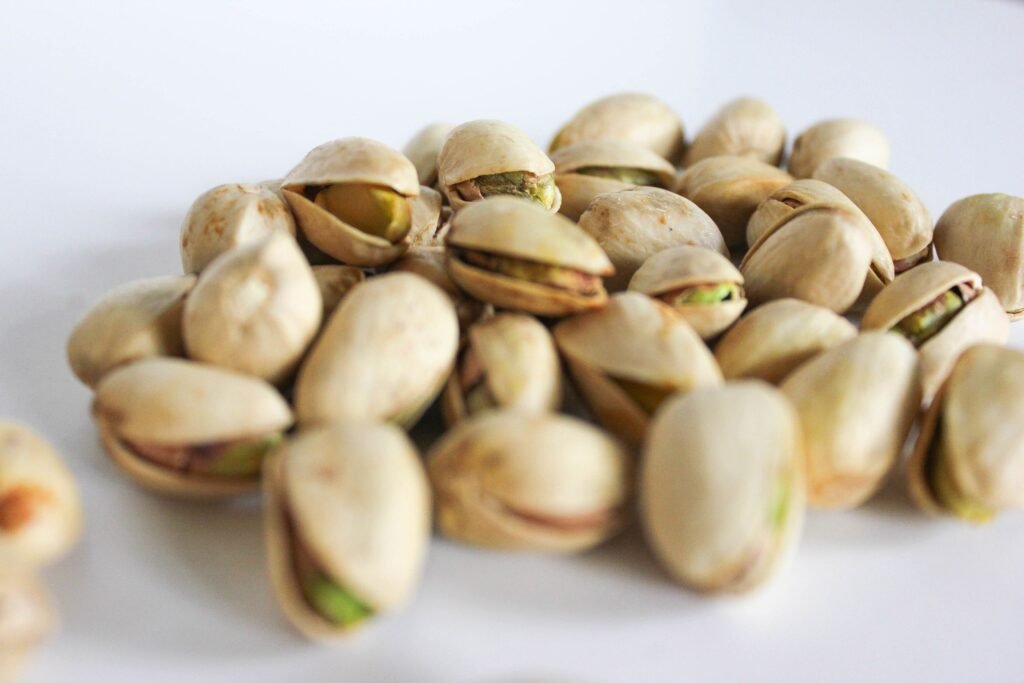
Photo by SC Studio: https://www.pexels.com/photo/pistachio-nuts-on-white-surface-10060931/
About Wellcore Weekly: Wellcore Weekly covers health, wellness, nutrition, sleep, fitness, and medical research with timely, easy-to-understand updates for everyday readers.
