
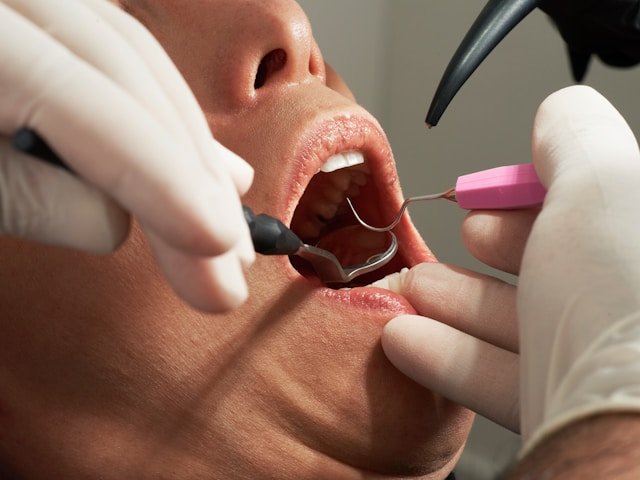
Could We Regrow Lost Teeth? Japan’s Groundbreaking Clinical Trial Brings That Future Closer
Researchers in Japan are conducting the world’s first human clinical trials of a medication designed to stimulate the growth of entirely new teeth. Instead of using artificial materials, the experimental therapy encourages the body to activate dormant tooth-forming cells that already exist within the jaw.
Although the treatment is still in the research phase, experts believe it could mark one of the most significant breakthroughs in regenerative medicine and dentistry in decades.
A New Way of Thinking About Tooth Loss
Traditionally, dentistry has focused on repairing damage rather than replacing living tissue.
Dental implants are highly successful and have transformed millions of lives, but they still involve surgically placing a titanium post into the jawbone. Bridges require support from neighboring teeth, while dentures often need periodic adjustments and replacements over time.
The new therapy takes a completely different approach.
Instead of inserting an artificial tooth, scientists hope to help the body grow a real one—complete with natural enamel, dentin, roots, nerves, and supporting tissues.
If successful, it would represent a major shift from mechanical replacement to true biological regeneration.
Unlocking the Body’s Hidden Potential
Most people know humans develop two sets of teeth during life: baby teeth and permanent adult teeth.
What many people don’t know is that researchers believe tiny dormant tooth buds remain hidden within the jaw. Under normal circumstances, these never develop because a naturally occurring protein called USAG-1 acts as a biological “off switch.”
Scientists at Kyoto University and Kitano Hospital, led by Dr. Katsu Takahashi, developed an experimental antibody therapy that temporarily blocks this protein.
Without USAG-1 interfering, important growth pathways involved in tooth development—known as BMP and Wnt signaling—appear to become active again, allowing dormant tooth buds to continue developing.
Animal studies have already shown encouraging results, with mice and ferrets successfully growing new teeth after receiving the treatment.
These promising findings paved the way for today’s human clinical trials.
The First Human Trials Are Underway
The treatment is now being evaluated through carefully monitored clinical trials led by Japanese researchers and biotechnology company Toregem BioPharma.
The research is progressing in several stages.
The first phase focuses primarily on safety, involving healthy adults with missing teeth to determine whether the medication can be administered without serious side effects.
If safety goals continue to be met, later trials will include children born with congenital conditions such as anodontia or hypodontia, where multiple permanent teeth never develop.
Eventually, researchers hope to study whether the treatment can help adults who have lost teeth because of injury, severe decay, or advanced gum disease.
This step-by-step approach helps ensure that both safety and effectiveness are thoroughly evaluated before any treatment becomes widely available.
Why Natural Teeth Would Be Better Than Implants
Dental implants remain one of the most reliable treatments available today, with excellent long-term success rates.
However, even the best implant cannot fully replicate the biology of a natural tooth.
A naturally grown tooth connects to the jaw through the periodontal ligament, a specialized tissue that cushions chewing forces and provides sensory feedback when we bite.
This ligament allows us to detect pressure, adjust chewing force, and maintain healthy jawbone stimulation throughout life.
Artificial implants fuse directly to bone and do not recreate this natural attachment.
If tooth regeneration becomes possible, patients may benefit from:
- Natural roots that strengthen and preserve jawbone.
- Improved bite sensation and chewing efficiency.
- Living tissue capable of adapting as the mouth changes.
- A potential treatment option for growing children, who often cannot receive implants because their jaws are still developing.
These advantages could significantly improve long-term oral health for millions of people.
A Promising Future—With Important Caveats
Despite the excitement surrounding the research, experts caution against expecting immediate availability.
Clinical trials are designed to answer many critical questions.
Researchers still need to determine how consistently new teeth develop, whether they emerge in the correct position, how long the process takes, and whether the treatment remains safe over many years.
There are also practical considerations, including the ideal age for treatment, cost, accessibility, and how dentists might guide newly developing teeth into proper alignment.
If future clinical trials continue producing positive results, scientists believe the therapy could potentially become available sometime around 2030, although regulatory approval timelines may vary.
What This Means for Patients Today
For people living with missing teeth, this breakthrough represents hope—but not a replacement for current dental care.
Dental implants, bridges, dentures, and good preventive care remain the best proven treatment options available today.
Still, regenerative dentistry is moving from science fiction toward scientific reality.
Instead of simply replacing damaged teeth, future dentists may one day help patients regrow them naturally.
Photo by Caroline LM on Unsplash
About Wellcore Weekly: Wellcore Weekly covers health, wellness, nutrition, sleep, fitness, and medical research with timely, easy-to-understand updates for everyday readers.