
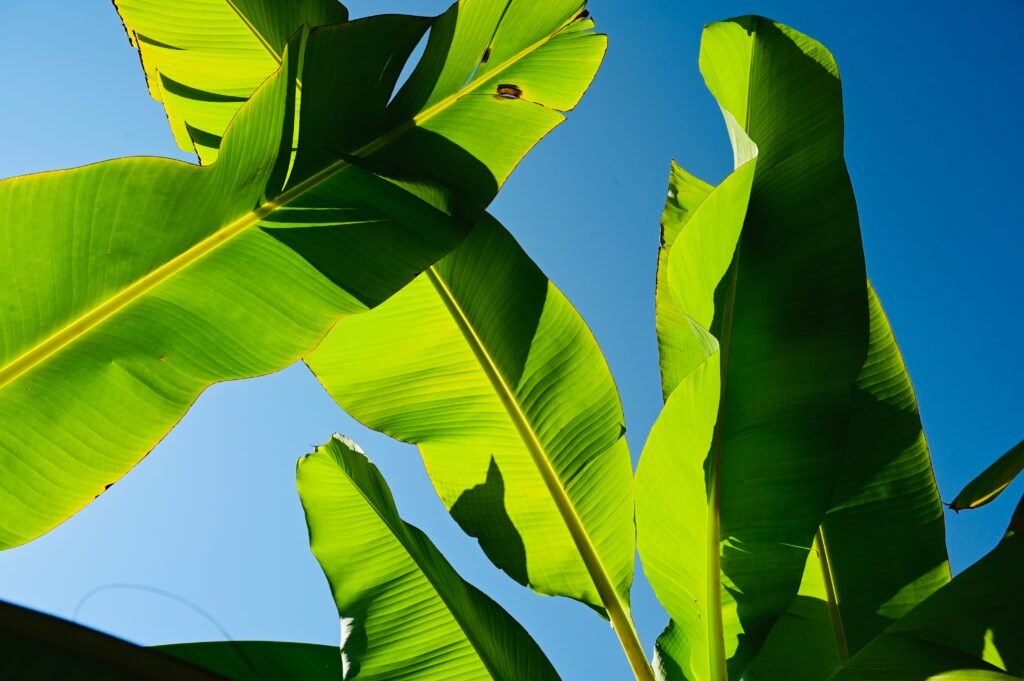
The Return of the Banana Leaf: Could Traditional Food Wrapping Be Better for Health?
Walk through a modern supermarket and you may notice something strange: nature has already given many foods their own protective covering, yet we often wrap them in even more material.
Cucumbers are covered in plastic film. Herbs are packed into plastic containers. Fruits and vegetables are placed in bags, trays, and shrink-wrap before they even reach our kitchens.
For decades, plastic packaging has been associated with convenience, hygiene, and longer shelf life. But growing concerns about plastic waste, chemical exposure, and microplastics have encouraged consumers and retailers to ask an important question: Do we really need so much packaging around our food?
One traditional alternative has attracted global attention—banana leaves.
In parts of Asia, Africa, and Latin America, banana leaves have been used for generations to wrap, carry, cook, and serve food. More recently, images of vegetables wrapped in banana leaves at supermarkets in Southeast Asia have gone viral, presenting an old practice as a possible modern solution to excessive plastic packaging.
The idea is appealing. But what does the switch from plastic to plant-based packaging actually mean for human health?
The Growing Health Debate Around Food Packaging
Plastic packaging plays an important role in the modern food system. It can protect food from contamination, reduce moisture loss, and sometimes extend shelf life.
However, scientists are increasingly studying how chemicals used in some food-contact materials may migrate into food under certain conditions.
Depending on the type of plastic and how it is manufactured, food packaging can contain substances such as plasticizers, stabilizers, colorants, and other additives. Heat, storage time, food composition, and repeated use can influence how chemicals move between packaging and food.
Some chemicals associated with plastics, including certain phthalates and bisphenols, have raised health concerns because of their potential effects on the endocrine system.
This does not mean that every plastic package is dangerous or that eating food wrapped in plastic will automatically cause illness. The level of exposure depends on many factors, and food-safety regulations exist to limit harmful chemical migration.
Still, public health experts increasingly support a broader goal: reducing unnecessary exposure where practical and reducing unnecessary single-use packaging.
That is where traditional materials such as banana leaves enter the conversation.
Why Banana Leaves Have Been Used for Generations
Banana leaves are naturally broad, flexible, and water-resistant. These qualities make them useful for wrapping and transporting food.
Their smooth, waxy surface helps repel moisture, while the leaves themselves are biodegradable and renewable in regions where banana plants grow abundantly.
For generations, communities have used banana leaves to wrap rice, steamed foods, fish, vegetables, and traditional dishes.
Unlike petroleum-based packaging, a clean and properly prepared banana leaf does not require synthetic plastic polymers to function as a basic food wrap.
That can make it an attractive option for reducing dependence on single-use plastic—particularly in tropical regions where banana leaves are locally available.
But it is important not to romanticize the practice.
A banana leaf is not automatically safer simply because it is natural. Like any food-contact material, it must be properly cleaned and handled. Leaves exposed to pesticides, contaminated water, or poor storage conditions could create their own food-safety risks.
Natural packaging still needs good hygiene.
Less Plastic May Mean Less Unnecessary Exposure
One of the strongest health arguments for reducing unnecessary plastic packaging is not that banana leaves are a miracle health product.
It is much simpler: using fewer unnecessary materials can reduce opportunities for unnecessary exposure.
Consumers today are exposed to many chemicals through food, water, household products, cosmetics, and the environment. Scientists are still working to understand the long-term health effects of chronic exposure to complex mixtures of chemicals and microplastics.
Microplastics have now been detected in environmental systems and human tissues, creating an active area of health research. However, many questions remain about exactly how different levels of exposure affect long-term human health.
This uncertainty is one reason why reducing avoidable plastic waste has become both an environmental and public-health concern.
Choosing products with less unnecessary packaging is a practical step—not because every piece of plastic is immediately harmful, but because reducing unnecessary use can lower waste and potentially reduce avoidable exposure pathways.
The Environmental Health Connection
Human health and environmental health are closely connected.
Plastic that enters the environment does not simply disappear. Larger items can gradually break down into smaller particles, while plastic waste can accumulate in soil, waterways, and oceans.
Environmental pollution can eventually affect food systems, drinking water, wildlife, and communities.
Banana leaves offer one advantage that conventional plastic cannot: they return to the natural environment much more easily.
After appropriate use, plant material can generally be composted or biodegrade naturally under suitable conditions.
However, the environmental benefits depend heavily on location.
For countries such as India, Thailand, Vietnam, Indonesia, and the Philippines—where banana plants are common—locally sourced leaves may be a practical alternative for certain types of packaging.
But shipping fresh banana leaves across the world simply to replace locally available packaging could create additional environmental costs.
The real lesson is not that every supermarket should start importing banana leaves.
The lesson is to look locally for lower-waste solutions.
The Biggest Question: Does the Food Need Wrapping at All?
Perhaps the most important part of this discussion is often overlooked.
Before replacing plastic with banana leaves, paper, bamboo, or another material, we should first ask:
Does this food need to be individually wrapped?
An orange already has a peel. A banana comes with natural packaging. Onions, potatoes, avocados, and many other foods have protective outer layers.
Replacing one disposable material with another is not always the most sustainable solution.
The healthiest and most environmentally responsible approach may often be to avoid unnecessary packaging altogether.
Practical Ways to Reduce Plastic in Your Kitchen
You do not need access to banana leaves to reduce unnecessary plastic use at home.
1. Buy loose produce when possible
Choose unpackaged fruits and vegetables when it is safe and practical to do so.
2. Use reusable produce bags
Washable cotton or mesh bags can reduce dependence on single-use plastic bags.
3. Store vegetables properly
Some vegetables stay fresh longer when stored in breathable containers or wrapped in clean reusable cloth rather than sealed tightly in unsuitable packaging.
4. Use reusable food containers
Glass and stainless-steel containers can be useful for storing leftovers and prepared foods.
5. Choose packaging based on the food
Not all foods should be treated the same way. Proper packaging can sometimes prevent food spoilage, which is also an important environmental and health issue.
An Old Idea With a Modern Lesson
The growing interest in banana leaf packaging is about more than nostalgia.
It reflects a wider public-health conversation about the materials surrounding our food every day.
Modern packaging has brought genuine benefits, including improved food preservation and protection during transport. But convenience has also created a culture of over-packaging.
A traditional banana leaf reminds us that not every solution has to come from a new chemical formula or an advanced manufacturing process.
Sometimes the better question is not, “What new material should replace plastic?”
It is, “What is the simplest and safest way to protect this food?”
For some communities, the answer may be a banana leaf. For others, it may be reusable containers, locally available plant-based materials, or simply no packaging at all.
The goal should not be to declare every plastic product dangerous or every natural material perfect.
The real health lesson is more practical: reduce unnecessary exposure, reduce unnecessary waste, and make food safety the priority.
The future of healthier food systems may depend not only on what we eat—but also on how much material we place between our food and the world around us.
Photo by SunLi S: https://www.pexels.com/photo/vibrant-banana-leaves-against-clear-blue-sky-34835137/
About Wellcore Weekly: Wellcore Weekly covers health, wellness, nutrition, sleep, fitness, and medical research with timely, easy-to-understand updates for everyday readers.