
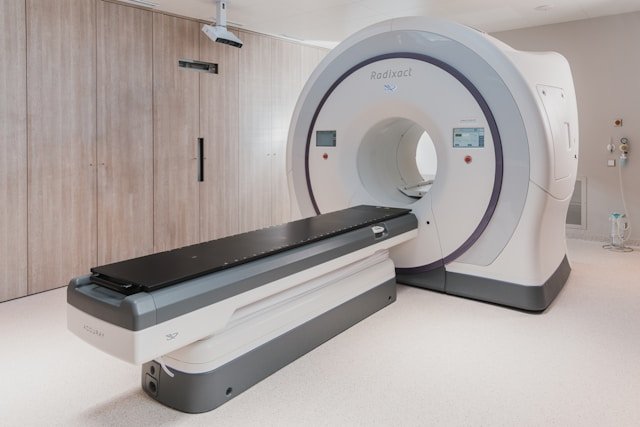
Australia’s First MRI-Guided Cryoablation Program Offers a New Minimally Invasive Option for Certain Tumors
A new image-guided cancer treatment program launched at Liverpool Hospital in Sydney is highlighting how advances in medical imaging and interventional radiology may expand treatment options for some patients with difficult-to-treat tumors.
The hospital recently introduced Australia’s first dedicated in-bore MRI-guided cryoablation system, a technology that uses extreme cold to destroy targeted tumor tissue while allowing physicians to monitor treatment in real time using high-resolution magnetic resonance imaging (MRI). The program, described by interventional radiologist Dr. Glen Schlaphoff and colleagues in the Journal of Medical Imaging and Radiation Oncology, represents an important milestone in the growing field of minimally invasive cancer therapies.
While cryoablation is not a replacement for surgery, radiation therapy, or systemic cancer treatments, specialists believe MRI-guided procedures may provide an additional treatment option for carefully selected patients, particularly when tumors are located near sensitive anatomical structures.
What Is Cryoablation?
Cryoablation is a medical procedure that destroys abnormal tissue by exposing it to extremely low temperatures.
During treatment, physicians insert thin needle-like probes directly into the tumor under image guidance. Compressed argon gas is then delivered through the probe, rapidly reducing the temperature at its tip to approximately minus 180 degrees Celsius. The resulting freezing process forms a controlled “iceball” around the target tissue.
The extreme cold damages cellular structures, disrupts cell membranes, and reduces blood supply within the treated area, leading to destruction of the targeted tissue.
Unlike traditional surgery, cryoablation does not require large incisions. Instead, treatment is performed through small probe entry points, potentially reducing recovery time and minimizing trauma to surrounding tissues.
Why MRI Guidance Is a Significant Advancement
Cryoablation has been performed for years using various imaging technologies, including CT scans and ultrasound. However, MRI guidance offers several advantages in selected cases.
MRI provides exceptional visualization of soft tissues and allows physicians to continuously monitor both the tumor and the expanding freezing zone during treatment. This real-time imaging can help specialists evaluate the exact boundaries of the iceball as it develops.
This level of precision may be particularly valuable when treating tumors located near:
- The spinal cord
- Major nerves
- The liver
- The kidneys
- Blood vessels
- Other critical organs
For tumors in these challenging locations, preserving nearby healthy tissue is often one of the most important treatment considerations.
How the Procedure Is Performed
The MRI-guided cryoablation procedure is typically performed under anesthesia within a dedicated MRI environment.
Using continuous imaging, physicians guide specialized probes into the tumor. Once the probes are correctly positioned, controlled freezing cycles are initiated while the medical team monitors the treatment area in real time.
Because MRI can clearly visualize the freezing process, clinicians are able to assess whether the target tissue is being adequately treated while helping minimize exposure to adjacent healthy structures.
For many patients, the procedure can be completed in a single session, with hospital stays often shorter than those associated with major surgical interventions.
Which Patients May Benefit?
MRI-guided cryoablation is not intended for every cancer patient. Treatment decisions depend on numerous factors, including tumor type, size, location, stage, and the patient’s overall health.
The technique may be considered for selected musculoskeletal tumors and certain solid organ tumors when physicians determine that a minimally invasive approach could provide clinical benefit.
In some situations, cryoablation may be used when conventional surgery carries increased risks due to the tumor’s location. In others, it may be combined with additional cancer treatments as part of a broader treatment strategy.
Experts emphasize that decisions regarding cancer care should always be individualized and made by a multidisciplinary team of specialists.
How Does It Compare With Traditional Surgery?
For some tumors, surgery remains the standard and most effective treatment option. Surgical removal can provide direct access to the tumor and may be necessary when complete excision is required.
However, surgery can also involve larger incisions, longer recovery periods, and greater disruption of surrounding tissues.
MRI-guided cryoablation offers a different approach. Rather than removing the tumor through an open operation, physicians destroy targeted tissue through needle-based treatment. This may reduce recovery times and allow some patients to return home sooner.
The choice between surgery and cryoablation depends on the specific clinical circumstances rather than one treatment being universally superior to the other.
Risks and Limitations
Like all medical procedures, cryoablation carries potential risks.
Possible complications may include:
- Bleeding
- Infection
- Damage to nearby structures
- Incomplete tumor destruction
- Tumor recurrence requiring additional treatment
In addition, not all tumors can be safely or effectively treated using cryoablation. Some cancers may be too large, too widespread, or better suited to other treatment approaches.
Researchers continue to evaluate long-term outcomes to better understand which patients are most likely to benefit from MRI-guided cryoablation.
A Growing Trend in Precision Medicine
The introduction of Australia’s first dedicated in-bore MRI-guided cryoablation program reflects a broader shift toward precision medicine and image-guided interventions.
Advances in imaging technology increasingly allow physicians to target disease with greater accuracy while reducing unnecessary impact on healthy tissues. Similar innovations are being explored across oncology, cardiology, neurology, and other medical specialties.
As researchers continue to study these technologies, image-guided treatments may expand the range of options available to patients who previously faced more invasive procedures.
Liverpool Hospital’s new MRI-guided cryoablation system represents an important step forward in minimally invasive cancer care. By combining high-resolution MRI imaging with targeted freezing technology, physicians can precisely monitor tumor treatment in real time while helping protect nearby healthy tissue.
Although the technique is not appropriate for every tumor or every patient, it highlights how advances in medical imaging and interventional radiology are creating new possibilities for treating complex conditions with greater precision and potentially shorter recovery times.
Reference
Schlaphoff, G., Xiang, H., & Logaraj, A. (2025). Implementation of the first in-bore MRI-guided cryoablation program for musculoskeletal and solid organ tumors in Australia. Journal of Medical Imaging and Radiation Oncology, 69(6), 712–721.
About Wellcore Weekly: Wellcore Weekly covers health, wellness, nutrition, sleep, fitness, and medical research with timely, easy-to-understand updates for everyday readers.