The Hidden Health Risks Behind ‘Bucket-List’ Adventure Activities
From mountain biking and kayaking to climbing and skydiving, outdoor adventures can be exciting—but the growing popularity of high-risk recreation also brings an important health question: how can people enjoy the outdoors without turning recreation into an avoidable injury?
Adventure activities are often marketed as unforgettable experiences. Yet behind the excitement are real concerns involving traumatic injuries, drowning, heat exposure and overexertion. Here is what current public-health evidence tells us about the risks.
Adventure can be good for health—but risk still matters
Spending time outdoors and being physically active can support cardiovascular health, mobility, mood and overall wellbeing. Hiking, cycling and paddling can all provide opportunities to move more and spend less time sitting.
But not every outdoor activity carries the same level of risk.
Activities involving substantial heights, fast-moving water, rapid speeds or difficult terrain can turn a small mistake into a serious injury. The World Health Organization estimates that injuries and violence cause about 4.4 million deaths worldwide each year, with millions more people experiencing non-fatal injuries that require medical treatment or rehabilitation.
That makes injury prevention an important part of the modern outdoor-health conversation.
Water activities deserve particular attention
Scuba diving, surfing and kayaking can provide memorable ways to experience nature, but water introduces risks that are easy to underestimate.
Drowning remains a major global public-health problem. WHO reports approximately 300,000 drowning deaths worldwide each year, with children and young people disproportionately affected. More than half of drowning deaths occur among people under 30.
The encouraging news is that drowning deaths have declined substantially since 2000. But the continuing burden shows why water safety cannot be treated as an afterthought. Weather, currents, fatigue, poor visibility and inadequate supervision can all change the level of danger.
For families, this is especially important around children and teenagers, who may underestimate changing water conditions.
Heights and speed can change the consequences of a fall
Rock climbing, mountain biking and other activities involving height or speed place additional demands on balance, coordination and reaction time.
A fall can result in fractures, head injuries, spinal injuries or other trauma. The consequences can be particularly serious for older adults, whose bones may be more vulnerable to fractures and whose recovery from major injuries can take longer.
This does not mean older people should avoid being active outdoors.
Quite the opposite.
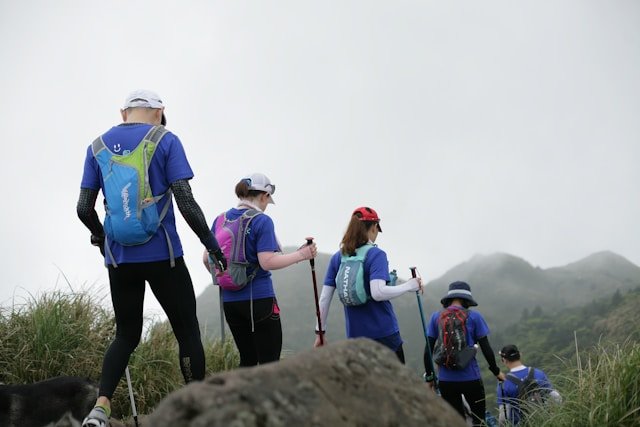
Walking, gentle hiking and other appropriately chosen forms of outdoor activity can be valuable ways to maintain strength, balance and independence. The important distinction is between healthy physical activity and unnecessary exposure to extreme hazards.
Heat is another outdoor health issue
Adventure stories often focus on adrenaline, but environmental conditions can be just as important.
Hot weather increases the risk of dehydration and heat-related illness, particularly during prolonged physical activity. Older adults may be especially vulnerable because the body’s ability to regulate temperature can change with age, while some medications and chronic conditions can further affect heat tolerance.
Climate change also makes this issue increasingly relevant. More frequent heatwaves and extreme weather can change the safety profile of outdoor recreation.
The same trail, river or climbing area may therefore present very different health conditions on different days.
The body can be pushed too far
There is also a less dramatic risk: overexertion.
People who are enthusiastic about adventure activities may sometimes attempt more physical work than their current fitness allows. Sudden increases in activity can contribute to muscle injuries, falls and excessive fatigue.
For older adults returning to exercise after a long period of inactivity, gradual progression is particularly important.
A challenging outdoor activity does not have to be extreme to be meaningful. A comfortable hike with beautiful scenery can provide many of the psychological benefits people seek from adventure without requiring extreme physical demands.
What families should remember about water
Drowning prevention is especially relevant when children are involved.
WHO recommends measures including appropriate supervision, swimming and water-safety education, barriers around water hazards, effective weather warnings and appropriate safety equipment.
One important message is that drowning can happen quickly and does not necessarily resemble the dramatic scenes shown in films.
That is why supervision around water needs to be active rather than assumed.
Adventure does not have to mean danger
The popularity of “bucket-list” experiences reflects something positive about human health: people want movement, novelty, nature and memorable experiences.
Those goals are worth protecting.
The mistake is believing that the greatest health benefit must come from the greatest physical risk.
For many people, especially older adults, a safer version of an outdoor experience may provide more lasting value. A scenic walk, accessible nature trail, gentle cycling route or supervised recreational activity can still deliver exercise, fresh air and social connection.
And those benefits do not disappear simply because an activity is less extreme.
The real goal is coming home healthy
Outdoor recreation can enrich physical and mental health, but adventure should never be confused with ignoring risk.
Current public-health evidence makes the broader lesson clear: injuries and drowning remain preventable causes of illness and death, even as people increasingly seek active experiences outdoors.
The best adventure is not necessarily the one that produces the biggest adrenaline rush.
It may be the one that gives you a wonderful memory, leaves your body feeling stronger rather than injured, and lets you return home ready for the next day.
For older adults and families, that is a much better definition of an adventure worth remembering.
About Wellcore Weekly: Wellcore Weekly covers health, wellness, nutrition, sleep, fitness, and medical research with timely, easy-to-understand updates for everyday readers.