
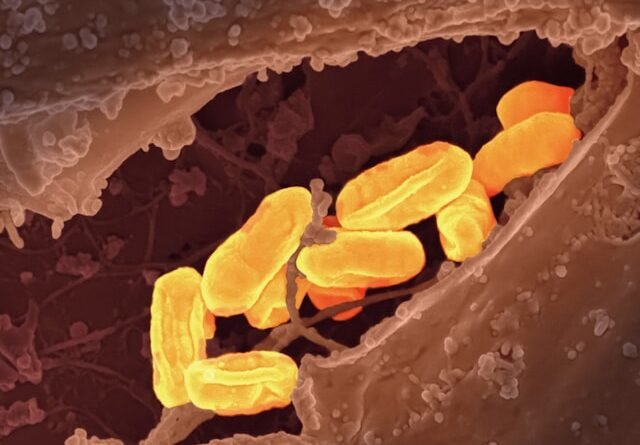
The Hand Sanitizer Trap Why a Tough-Shelled Parasite Is Driving a Surge in U.S. Stomach Illness
For a lot of people, a squirt of hand sanitizer after touching a shopping cart or grabbing a quick bite feels like enough protection. But this summer’s cyclosporiasis outbreak is a reminder that not every germ plays by the same rules — and one particular parasite is walking right through that defense.
The culprit is Cyclospora cayetanensis, a microscopic single-celled parasite behind a growing wave of gastrointestinal illness across the country. The CDC says it has confirmed 1,645 domestically acquired cases in 34 states since May 1 — more than six times the 249 cases reported over the same stretch last year — with a median patient age of 44 and about 9% of cases requiring hospitalization. Separately, a specific multistate outbreak tied to iceberg lettuce has now reached 1,947 confirmed cases across nine states, mostly concentrated in the Midwest and mid-Atlantic, including Michigan, Ohio, Indiana, Kentucky, and Pennsylvania, with 98 people hospitalized and no deaths reported.
Investigators traced that lettuce-linked cluster to iceberg lettuce grown by Taylor Farms de Mexico, distributed to restaurants including Taco Bell. The company issued a recall on July 17 covering iceberg lettuce sold at retail and used in food service. Health officials caution that both numbers likely understate the real scope of the outbreak, since cyclosporiasis is frequently missed by routine lab testing and many mild cases go unreported.
Why Alcohol Sanitizer Doesn’t Work Here
Alcohol-based hand sanitizers are effective against many common bacteria and viruses because ethanol and isopropyl alcohol dissolve the fragile lipid membranes that surround those germs. Cyclospora doesn’t have that kind of vulnerable membrane. It survives outside the body encased in a tough, multi-layered oocyst wall built to withstand harsh environments — including the brief contact time and evaporation of an alcohol-based gel. The same is true of some other resilient gut parasites, like Cryptosporidium.
That’s why public health guidance keeps coming back to the basics: soap and running water, applied with enough friction and time, physically dislodge the oocysts from skin in a way that alcohol alone cannot.
How People Are Getting Sick
Cyclospora spreads through contaminated food or water — most often fresh produce that’s eaten raw, since the parasite’s oocysts cling stubbornly to the surface of leaves and fruit skins. Beyond the lettuce linked to this outbreak, past U.S. cases have been tied to items like fresh cilantro, basil, and berries, particularly when imported from regions where the parasite is more common in water and soil.
What Cyclosporiasis Actually Feels Like
Symptoms typically show up about a week after exposure, though the range is anywhere from 2 to 14 days. Unlike a short bout of typical food poisoning, cyclosporiasis can be a slog: watery diarrhea, often frequent and severe; cramping and bloating; deep fatigue; loss of appetite and unintended weight loss; and intermittent nausea, sometimes with a low-grade fever. Left untreated, symptoms can wax and wane for weeks or even a month or more, since the parasite infects the small intestine and interferes with normal nutrient absorption.
Protecting Yourself and Your Family
Health officials recommend a few concrete steps:
- Wash with soap and running water, not sanitizer, especially before eating or handling fresh produce, and after being out in public. Scrub for a full 20 seconds.
- Rinse produce thoroughly under running water, and use a clean brush on firm-skinned items like melons and cucumbers. It won’t remove every oocyst, but it helps.
- Cook when you can. Heat destroys Cyclospora, so cooked vegetables and hot meals don’t carry the same risk as raw produce.
- See a doctor if diarrhea lasts more than a few days. Standard over-the-counter anti-diarrheal medication won’t clear the infection. A stool PCR test can confirm Cyclospora, and the standard treatment is a course of the antibiotic trimethoprim-sulfamethoxazole.
The Bigger Picture
Alcohol hand sanitizer still has its place — it’s genuinely useful against many everyday viruses and bacteria. But this outbreak is a useful reminder that it isn’t a universal shield. When it comes to raw produce and the parasites that can hide on it, there’s no substitute for the fundamentals: clean water, real soap, and thorough cooking.
Photo by National Institute of Allergy and Infectious Diseases on Unsplash
About Wellcore Weekly: Wellcore Weekly covers health, wellness, nutrition, sleep, fitness, and medical research with timely, easy-to-understand updates for everyday readers.