
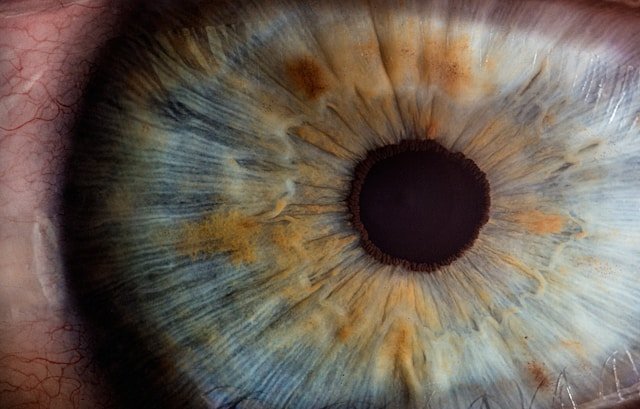
The End of the Donor Shortage? Scientists Just 3D-Printed a Human Cornea
For millions of people worldwide living with corneal blindness, the path to seeing again usually involves a grueling waiting game. You wait for a donor, you wait for a surgery, and then you pray your body doesn’t reject a stranger’s tissue.
But what if we could just… print a new one?
It sounds like pure science fiction, but researchers at Pohang University of Science and Technology and Kyungpook National University have officially turned the page on a new chapter of regenerative medicine. They’ve successfully 3D-printed a cornea that doesn’t just look like the real thing—it acts like it, too.
The Secret Sauce: It’s All in the “Bioink”
In the past, scientists tried using synthetic plastics or heavy-duty polymers to fix the eye. The problem? The human eye is incredibly picky. It needs a specific lattice of collagen to remain transparent. If the pattern is off by even a fraction, the “lens” becomes cloudy, and you’re right back where you started.
The South Korean team bypassed this by creating a specialized “bioink.” They used actual corneal stroma (the eye’s middle layer) and stem cells. By using biological building blocks instead of plastic, they’ve created a tissue that the body actually recognizes as “self” rather than a foreign invader.
The “Shear Stress” Breakthrough
The real genius here—and the reason I’m so optimistic about this—is how they handled the printing process. Corneas are clear because their collagen fibers are perfectly aligned like a stack of crystal-clear window panes.
The researchers figured out how to use “shear stress” during the 3D printing process. By controlling the friction as the ink leaves the nozzle, they forced the collagen fibrils to align in a precise, circular pattern that mimics a natural human eye. This was a feat many experts thought was impossible with current tech.
Why This Matters (The Honest Opinion)
Let’s be real: the current organ donation system is a bottleneck. We have a global shortage of corneas, and in many parts of the world, a transplant is a luxury that simply doesn’t exist.
This 3D-printing tech is the ultimate “democratizer” of healthcare. If we can mass-produce biocompatible corneas that don’t trigger rejection, we aren’t just fixing eyes; we’re restoring lives on a scale we’ve never seen. It’s a massive win for bioengineering and a middle finger to the limitations of biological aging.
While we aren’t at the “print-on-demand” stage at your local clinic just yet, this proof of concept proves that the architecture of the human eye is no longer a mystery we can’t replicate. We are moving toward a future where “permanent” blindness might just be a temporary condition.
About Wellcore Weekly: Wellcore Weekly covers health, wellness, nutrition, sleep, fitness, and medical research with timely, easy-to-understand updates for everyday readers.