
The 3 a.m. Mystery: You’re Not an Insomniac, You’re a Time Traveler
There is a specific kind of lonely dread that hits when your eyes snap open at 3:15 a.m. The house is silent, your phone is tempting you, and all you can think is: Why is my brain doing this to me? I’m going to be a zombie tomorrow.
But here’s a thought that might actually help you drift back off: You aren’t broken. In fact, you might be the only person in your house whose body is actually doing exactly what it was evolved to do.
According to historian Roger Ekirch, that middle-of-the-night wake-up call isn’t a defect of the modern mind. It’s a biological echo of “Segmented Sleep.”
The “First” and “Second” Sleep
Before the Industrial Revolution forced us into the “eight-hour grind,” humans didn’t sleep in one big chunk. We had a First Sleep (starting shortly after dusk) and a Second Sleep (ending at dawn).
In between, there was a “watch”—a magical, quiet hour or two in the dead of night. People didn’t toss and turn in frustration; they got up. They prayed, they talked, they reflected, and—yes—they were often at their most creative. It was a time of “active rest” that the modern world has completely paved over with artificial light and 9-to-5 schedules.
How the Lightbulb Stole the “Watch”
So, what changed? In a word: Electricity. As streetlights and home bulbs pushed our “First Sleep” later and later, we compressed our rest into one continuous block to satisfy the demands of modern labor. We traded a natural, rhythmic interval for a forced, industrial-strength slumber.
Now, when our bodies naturally stir at 3 a.m.—just like our ancestors’ bodies did for thousands of years—we panic. We call it “maintenance insomnia” and reach for a pill or a podcast. But science shows that when humans are removed from artificial light, our bodies instinctively revert to this two-stage cycle. Your DNA still remembers the pre-industrial night.
Reclaiming Your 3 a.m. Peace
If you find yourself awake tonight, stop fighting it. The stress of trying to sleep is often what keeps you awake longer than the natural cycle intended.
- Don’t touch the light: Keep the environment dim to protect your melatonin.
- Avoid the “Scroll”: Your phone is the ultimate “First Sleep” killer. Blue light tells your brain it’s noon, not 3 a.m.
- Lean into the quiet: Use that time for a bit of meditation or just some calm reflection. Often, if you stop viewing it as a “disorder,” your body will naturally slip back into its “Second Sleep” within 30 to 60 minutes.
We’ve been conditioned to think that any deviation from eight solid hours is a health crisis. But maybe the “crisis” is actually just us losing touch with our natural rhythms. You aren’t a bad sleeper; you’re just experiencing the night the way humans were meant to.
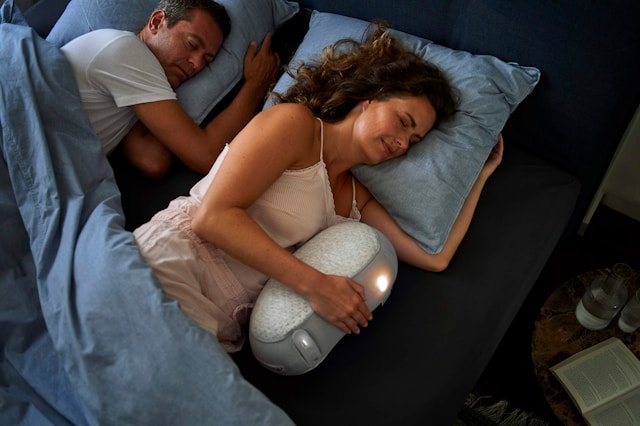
Photo by Somnox Sleep on Unsplash
About Wellcore Weekly: Wellcore Weekly covers health, wellness, nutrition, sleep, fitness, and medical research with timely, easy-to-understand updates for everyday readers.