
Scientists Found a Cellular “Switch” That Decides Whether Your Body Burns Fat or Stores It
Researchers at Israel’s Weizmann Institute disabled a single protein in human cells and watched them start burning through fuel instead of stockpiling it — a discovery years in the making that started with an odd result in mice.
The story behind this discovery didn’t start with a plan to find a fat-burning switch. It started with a strange observation nobody could immediately explain.
Several years ago, Prof. Atan Gross and his team at the Weizmann Institute of Science in Israel were studying a protein called MTCH2 — nicknamed “Mitch” — in mouse muscle tissue, mostly out of curiosity about its basic biology. When they silenced the gene that produces it, the mice didn’t just look normal. They looked remarkably good. Even on high-fat diets designed to pack on weight, the animals stayed lean, built more oxygen-hungry muscle fibers, and outperformed typical mice on endurance tests. It was the kind of result that raises more questions than it answers.
“We saw an increase in cellular respiration… this explains the increase in muscular endurance in previous experiments using mice.” — Sabita Chourasia, Weizmann Institute of Science
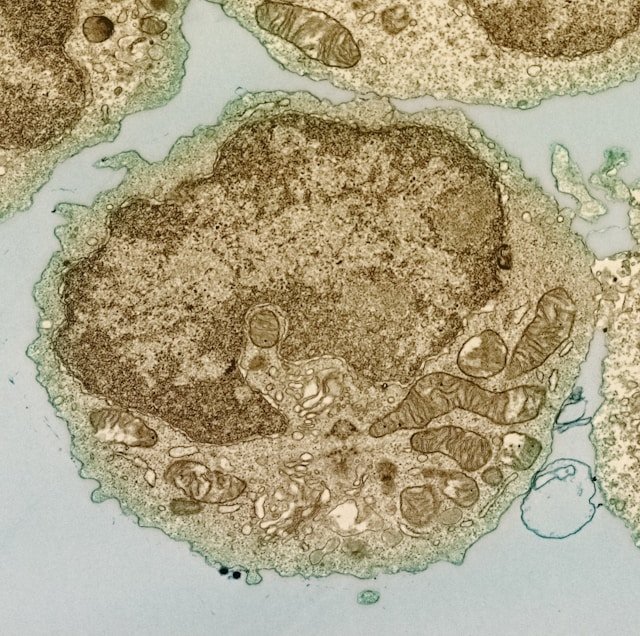
That puzzle sat until this year, when Gross’s team decided to test whether the same effect would show up in human cells — and, crucially, to figure out why it was happening at all. Mitch sits on the outer membrane of mitochondria, the structures inside every cell responsible for converting nutrients into usable energy. Using genetic tools, the researchers deleted the protein from human cell lines and then tracked what happened to more than 100 different metabolic molecules over the following hours.
The results, published this year in The EMBO Journal, showed the cells essentially panicked into overdrive. Without Mitch, mitochondria lost their normal ability to fuse together into an efficient network — but instead of shutting down, the cells compensated by burning through fat, carbohydrates, and amino acids far faster than usual just to keep up with their own energy demands. That surge in fuel-burning came with a second effect: pre-fat cells lost much of their ability to mature into fully formed, lipid-storing fat cells. Building new fat storage takes energy, and with Mitch gone, the cells simply didn’t have spare capacity left to do it.
Put simply, the same intervention that made cells burn more fuel also made it harder for them to build new fat stores in the first place — a double effect that’s part of what has other researchers in the field paying attention.
It’s worth being clear about what this research actually is and isn’t. This was done in lab-grown human cells, not in living people, and the fat-cell experiments specifically relied on a mouse cell line rather than human fat tissue. There’s no MTCH2 pill, and researchers involved in the work have been explicit that one isn’t close. Gross’s lab has reportedly started working with partners to explore whether the finding could eventually inform a drug, but that process — if it goes anywhere — is still in its early stages.
There’s also a real biological complication standing between this discovery and any future treatment. Mitch isn’t a protein that exists solely to manage fat storage. It also plays roles in mitochondrial structure and in apoptosis, the process by which damaged cells are cleared out of the body. Switching it off everywhere in the body at once isn’t something researchers are proposing — the more realistic (and much harder) goal would be targeting it selectively in fat or muscle tissue without disrupting its other jobs elsewhere, including in organs like the heart and brain where mitochondrial health is critical.
That distinction matters, because it’s exactly where past obesity research has stumbled. Several promising cellular targets over the years have looked compelling in early studies before running into the same wall: a mechanism that works in isolated cells or animal models doesn’t automatically translate into something safe to manipulate throughout an entire human body.
What makes this finding notable isn’t that it’s a shortcut to weight loss — it’s that it adds real mechanistic detail to a question metabolic researchers have been chasing for years: what actually determines whether a cell burns what you eat or stores it. Most current obesity treatments work by suppressing appetite. A therapy that instead pushed cells toward burning more fuel, without the muscle loss associated with some existing drugs, would represent a genuinely different approach — if the science holds up through the years of additional research still standing between this finding and anything a doctor could prescribe.
For now, Mitch remains a laboratory discovery, not a treatment. But it’s a clearer picture than researchers had before of one of the switches inside your own cells that decides, minute to minute, whether the fuel you take in gets burned or banked.
Photo by National Institute of Allergy and Infectious Diseases on Unsplash
About Wellcore Weekly: Wellcore Weekly covers health, wellness, nutrition, sleep, fitness, and medical research with timely, easy-to-understand updates for everyday readers.