
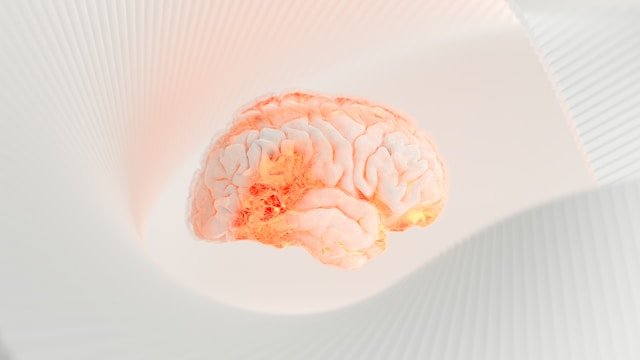
How Quantum Diamond Sensors Could Advance Non-Invasive Brain Research
For decades, scientists studying the brain have balanced a difficult trade-off. Highly detailed measurements of neural activity often require implanted electrodes, while non-invasive techniques such as electroencephalography (EEG) provide broader but less detailed signals.
Now, researchers are exploring a new approach that combines quantum physics with neuroscience: ultra-sensitive diamond-based sensors capable of detecting extremely small magnetic fields produced by brain activity.
Although the technology remains under development, it could eventually expand the tools available for studying the human brain without requiring surgery.
The Science Behind Quantum Diamonds
The sensors rely on tiny imperfections inside synthetic diamonds known as nitrogen-vacancy (NV) centers.
These atomic-scale defects give the diamond unique quantum properties, allowing it to respond to very small changes in nearby magnetic fields.
When neurons communicate, they generate weak electrical currents that also produce tiny magnetic fields. By illuminating the diamond with laser light, researchers can detect subtle changes in the light emitted by the NV centers, providing information about nearby magnetic activity.
This optical measurement allows scientists to study magnetic signals without placing electrodes directly into brain tissue.
Why Researchers Are Interested
Current brain-imaging techniques each have strengths and limitations.
Implanted electrodes can record highly localized signals but require invasive procedures, while external methods such as EEG and magnetoencephalography (MEG) capture activity across larger brain regions with different levels of spatial resolution.
Quantum diamond sensors could eventually complement these technologies by offering another way to measure neural activity with high sensitivity while minimizing physical contact with tissue.
Researchers emphasize that the technology is still being refined and is not yet widely used in clinical care.
Potential Medical Applications
If successfully developed for broader medical use, quantum diamond sensors could contribute to research on neurological conditions such as:
- Alzheimer’s disease
- Parkinson’s disease
- Epilepsy
- Stroke recovery
- Brain-computer interface research
By improving how scientists observe neural activity, the technology may help researchers better understand how brain networks function in both healthy and diseased states.
Quantum sensing represents one of the fastest-growing areas of interdisciplinary research, bringing together physics, engineering, and neuroscience.
While practical medical applications will require additional research and clinical validation, early studies suggest that diamond-based quantum sensors could become an important tool for investigating brain function in a safe and non-invasive manner.
Rather than replacing existing imaging technologies, these sensors may eventually complement them, giving researchers new ways to explore the complex electrical activity that underlies human cognition and neurological health.
About Wellcore Weekly: Wellcore Weekly covers health, wellness, nutrition, sleep, fitness, and medical research with timely, easy-to-understand updates for everyday readers.