
A New Era in Back Pain Treatment: Can Hydrogels Repair the Spine?
Chronic back pain—often caused by Degenerative Disc Disease—has long been managed rather than cured. But a new class of injectable biomaterials called hydrogels could change that entirely, offering the possibility of true spinal repair instead of temporary relief.
What Is Degenerative Disc Disease?
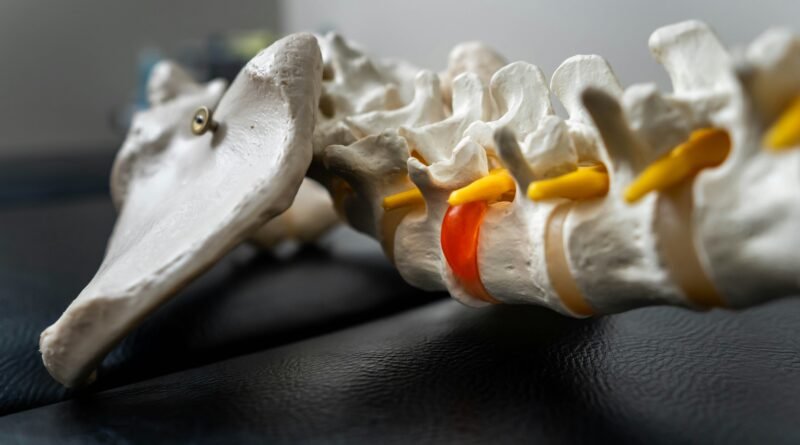
Degenerative disc disease (DDD) occurs when the soft, shock-absorbing discs between your vertebrae begin to dry out, weaken, or tear over time. These discs are essential for flexibility and cushioning.
- They act as natural shock absorbers
- They allow the spine to bend and rotate
- Damage can lead to chronic pain, stiffness, and nerve compression
DDD is extremely common, affecting millions of people worldwide, especially as they age .
The Problem with Current Treatments
Today’s treatments mainly focus on symptom control, not repair:
- Pain medications and anti-inflammatories
- Physical therapy
- Steroid injections
- Surgery (in severe cases)
These approaches may reduce discomfort, but they do not restore the damaged disc itself .
Enter Hydrogels: A Biological Repair Strategy
Hydrogels are water-rich, flexible biomaterials engineered to closely mimic the structure and function of natural spinal discs.
How They Work
- Injected directly into the damaged disc
- Expand and restore hydration
- Provide mechanical support and cushioning
- Act as a scaffold for cell growth and tissue repair
Some advanced hydrogels can even:
- Release anti-inflammatory or regenerative molecules
- Support new tissue formation
- Adapt to spinal movement without breaking down
Researchers describe them as a “biological replacement” for the disc’s inner core .
Why This Is a Breakthrough
Unlike traditional treatments, hydrogel therapy aims to fix the root cause:
1. Restores Disc Height and Function
Hydrogels re-expand collapsed discs, improving spinal alignment and reducing pressure on nerves.
2. Improves Shock Absorption
They mimic the natural gel-like core of healthy discs, allowing the spine to move normally again.
3. Minimally Invasive
The procedure is done via injection—no major surgery required.
4. Supports Regeneration
Some formulations encourage cells to rebuild damaged tissue, not just replace it.
What Do Early Studies Show?
Early clinical and experimental results are promising:
- Significant pain reduction and mobility improvement
- Better disc hydration and structure
- Potential long-term durability (still under study)
In one study of hydrogel implants, patients with chronic disc pain showed meaningful improvements after treatment .
Challenges and Ongoing Research
Despite the excitement, this technology is still evolving.
Key questions include:
- How long will the hydrogel last under constant spinal stress?
- Can it fully integrate with natural tissue over time?
- Will it work for all types of disc damage?
Large-scale clinical trials are currently underway to answer these questions.
The Future of Spine Medicine
Hydrogel therapy represents a major shift in how we think about treating spinal conditions:
- From pain management → structural repair
- From invasive surgery → minimally invasive regeneration
- From temporary relief → potential long-term solutions
If ongoing trials confirm early results, this approach could become a standard treatment for chronic back pain within the next decade.
Sources
- Healthline – Degenerative Disc Disease overview
- MDPI (2024) – Hydrogel-based strategies for disc regeneration
- PubMed – Clinical results of hydrogel disc treatment
- Verywell Health – Current treatment limitations
Photo by Julius Toltesi on Unsplash
About Wellcore Weekly: Wellcore Weekly covers health, wellness, nutrition, sleep, fitness, and medical research with timely, easy-to-understand updates for everyday readers.