
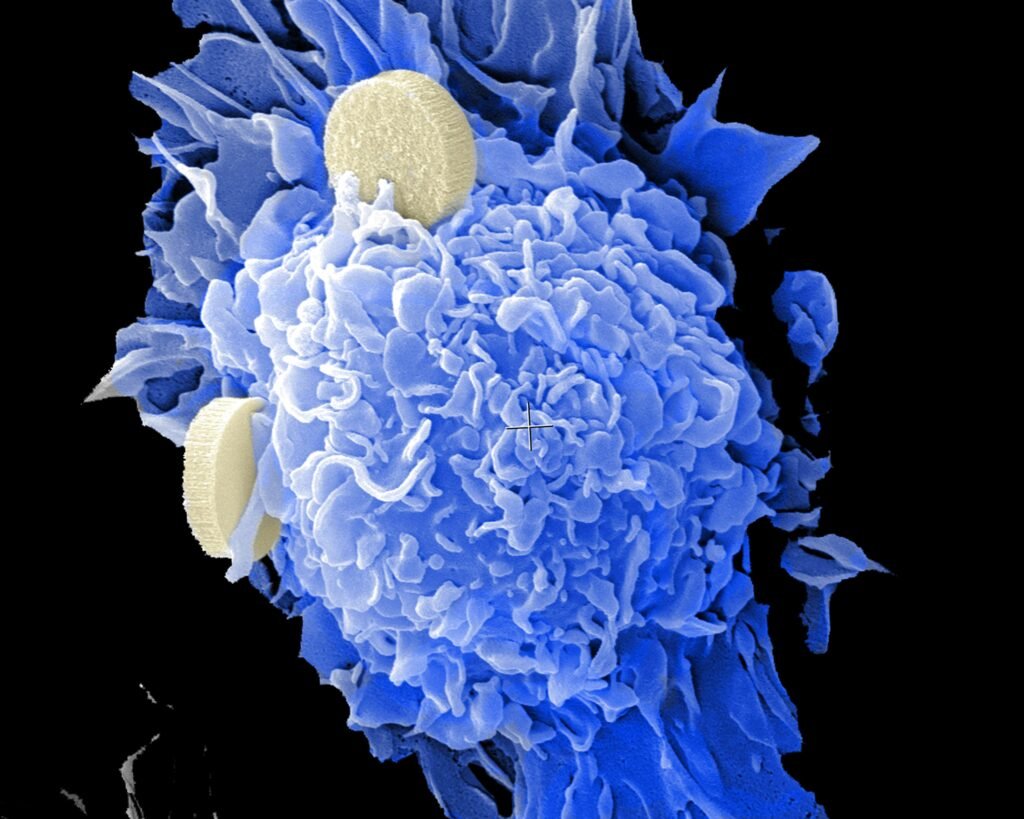
Scientists Develop “Smart” Nanoparticles That Deliver Cancer Drugs Directly to Tumors
In one of the most promising developments in cancer research, scientists are working on “smart” nanoparticles that can deliver drugs directly to tumors — potentially reducing damage to healthy cells.
This approach builds on the broader shift toward precision medicine, where treatments are designed to target disease more accurately.
🔬 What Are “Smart” Nanoparticles?
These are extremely small, engineered particles designed to:
- Carry cancer drugs through the bloodstream
- Identify and bind to tumor cells
- Release medication at the target site
👉 Think of them as guided delivery systems — helping drugs reach the right place while minimizing exposure to the rest of the body.
This idea is similar to other targeted approaches like personalized cancer vaccines and localized tumor treatments, which aim to improve precision.
📊 What Research Shows
Early studies suggest nanoparticle-based therapies may:
- Improve how drugs reach tumors
- Reduce side effects compared to traditional chemotherapy
- Enhance treatment effectiveness in certain cancers
According to the National Cancer Institute, nanotechnology is an active area of research with applications across multiple cancer types.
🎥 Watch: How Nanotechnology Targets Cancer Cells
🧠 Why This Matters
Traditional chemotherapy often affects both cancerous and healthy cells.
👉 Targeted delivery could mean:
- More precise treatment
- Lower toxicity
- Better patient experience
It’s part of a broader trend toward treatments that work with the body, rather than affecting it system-wide.
🐦 What Experts & Industry Are Saying
A growing number of researchers and health-tech platforms are highlighting the potential of nanotechnology in cancer care.
“Nanotechnology is opening new possibilities for targeted cancer treatment.”
While promising, experts note that most nanoparticle therapies are still under research and require further clinical validation.
🔗 Related Reading
- Learn how early detection through blood tests is changing cancer diagnosis
- Explore early signs of cancer most people overlook
- See how lifestyle choices may influence cancer risk
⚠️ Important Context
- Most nanoparticle therapies are still in clinical development
- Not yet widely available in standard care
- Long-term outcomes are still being studied
👉 This is a promising direction — not a universal cure
📚 Sources
- National Cancer Institute
- Nature Nanotechnology
Photo by National Cancer Institute on Unsplash
About Wellcore Weekly: Wellcore Weekly covers health, wellness, nutrition, sleep, fitness, and medical research with timely, easy-to-understand updates for everyday readers.