
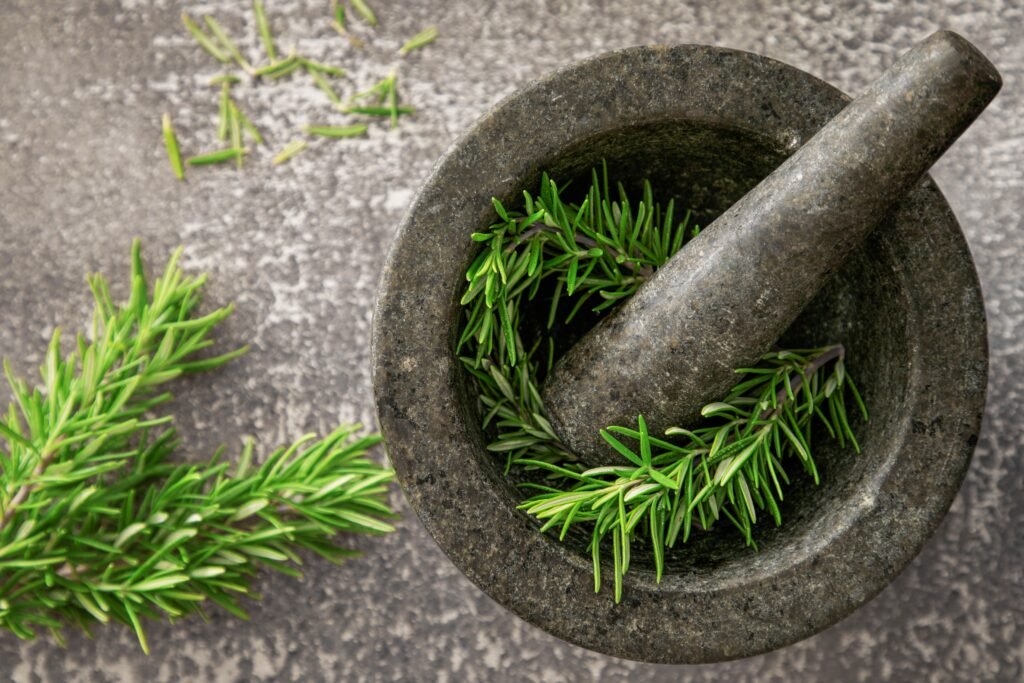
Rosemary and Brain Health: Can This Everyday Herb Support Memory?
For centuries, rosemary has been associated with memory.
Shakespeare famously linked the herb with remembrance, while traditional medicine has used rosemary for everything from digestion to mental fatigue. Today, researchers are asking a more modern question: can the compounds in rosemary actually influence how our brains work?
The answer is interesting, but not quite as simple as some wellness headlines suggest.
Research has found that certain compounds in rosemary may influence attention, alertness and aspects of memory. However, the human studies are generally small, and there is not enough evidence to say that eating rosemary prevents dementia or treats Alzheimer’s disease.
Still, this familiar kitchen herb may have a place in a broader brain-healthy lifestyle.
What Makes Rosemary Interesting to Neuroscientists?
Rosemary, scientifically known as Salvia rosmarinus, contains several biologically active compounds.
Among the most studied are 1,8-cineole (eucalyptol), rosmarinic acid and carnosic acid.
1,8-cineole is responsible for much of rosemary’s distinctive aroma. Researchers have investigated whether exposure to rosemary aroma or absorption of its compounds can influence alertness and cognitive performance.
Rosmarinic acid and carnosic acid have attracted attention because of their antioxidant and anti-inflammatory properties, although much of the evidence for these effects comes from laboratory and animal research rather than large human clinical trials.
That distinction matters.
A compound protecting cells in a laboratory dish does not automatically mean that eating the plant will produce the same effect in a person’s brain.
What Do Human Studies Actually Show?
Some small human studies have reported changes in memory or cognitive performance after rosemary exposure or consumption.
One study involving older adults examined different amounts of dried rosemary and found that a lower dose was associated with an improvement in memory-related cognitive performance, while the highest dose tested was associated with poorer performance.
This is an important reminder that more is not necessarily better when it comes to concentrated herbs and supplements.
Other research has examined rosemary aroma and compounds such as 1,8-cineole, with some studies reporting improvements in alertness or aspects of cognitive performance.
But these findings should be interpreted carefully. Studies differ in their preparation of rosemary, dose, duration and testing methods. Many involve relatively small numbers of participants.
So while the research is promising enough to justify further study, it is not strong enough to describe rosemary as a proven memory-enhancing treatment.
Why Might Rosemary Affect the Brain?
One area of interest is the brain’s cholinergic system.
Acetylcholine is a neurotransmitter involved in attention, learning and memory. Medicines used to manage symptoms of Alzheimer’s disease, including some acetylcholinesterase inhibitors, work partly by increasing the availability of acetylcholine in the brain.
Laboratory research suggests that some rosemary compounds may influence acetylcholinesterase activity.
That sounds exciting, but there is a major difference between showing an effect in a laboratory experiment and demonstrating meaningful improvement in people with dementia.
At present, rosemary should not be considered a natural substitute for prescribed Alzheimer’s medications.
Rosemary and Oxidative Stress
Another reason researchers are interested in rosemary is its antioxidant chemistry.
Carnosic acid and related compounds have been studied for their effects on cellular defense pathways, including pathways involved in protection against oxidative stress.
Oxidative stress is one of several biological processes investigated in connection with aging and neurodegenerative disease.
However, brain aging is complicated. Genetics, blood pressure, diabetes, sleep, physical activity, cardiovascular health and many other factors contribute to cognitive health.
There is no single herb that can cancel out these risks.
Can Rosemary Prevent Alzheimer’s Disease?
This is where it is important to separate evidence from enthusiasm.
Laboratory and animal research has produced interesting findings involving rosemary compounds and processes associated with neurodegeneration. But there is currently no strong clinical evidence showing that eating rosemary prevents, reverses or treats Alzheimer’s disease in humans.
That does not make the research meaningless.
It simply means scientists are still trying to determine whether observations from laboratory studies translate into meaningful long-term benefits for people.
For now, rosemary is best viewed as a nutritious culinary herb—not a dementia treatment.
How Can You Include Rosemary in Your Diet?
The simplest approach is also the least complicated: use rosemary as part of normal cooking.
Fresh or dried rosemary can add flavor to vegetables, beans, soups, potatoes, fish, poultry and whole grains. Using herbs can also make healthy meals more enjoyable without relying heavily on salt or highly processed sauces.
You do not need expensive “brain-boosting” rosemary supplements to include the herb in your diet.
And because concentrated extracts can deliver much larger amounts of plant compounds than ordinary food, they should not be treated as interchangeable with culinary rosemary.
People who take regular medications or have a medical condition should discuss concentrated herbal products with a healthcare professional before using them.
The Bigger Picture for Brain Health
Perhaps the most useful lesson from rosemary research is not that one herb can transform memory.
It is that everyday choices can contribute to a healthier brain.
Regular physical activity, adequate sleep, managing blood pressure and diabetes, not smoking, staying socially engaged and eating a balanced diet all have a much stronger place in current approaches to long-term brain health than any single herb or supplement.
Rosemary can be part of that picture.
Its fragrance may brighten a kitchen, its flavor can make nutritious food more appealing, and its plant compounds give scientists plenty to investigate.
But the most honest conclusion is also the simplest: rosemary is an interesting area of brain-health research, not a miracle cure for memory loss.
The ancient association between rosemary and remembrance may have inspired generations of writers and herbalists. Modern science is now testing that idea more carefully—and, for the moment, the evidence suggests a promising herb rather than a proven medicine.
Photo by Victoria Bowers: https://www.pexels.com/photo/green-plant-on-gray-concrete-pot-10487769/
About Wellcore Weekly: Wellcore Weekly covers health, wellness, nutrition, sleep, fitness, and medical research with timely, easy-to-understand updates for everyday readers.
