
The Third State Between Life and Death How Cells Can Form Biobots
For a long time, biology has generally treated life and death as two opposing states. An organism is alive while its systems function together, and death occurs when those integrated functions permanently stop.
But scientists are discovering that the story can be more complicated at the cellular level.
A 2024 review published in Physiology examined what happens to cells, tissues and organs after an organism dies. The researchers described a possible “third state,” referring to situations in which some cells remain functional after organismal death and, under particular laboratory conditions, can display unexpected forms of organization and activity.
The idea does not mean that a dead person can come back to life. Instead, it highlights an important distinction: the death of an organism does not necessarily mean that every cell inside it stops functioning at exactly the same moment.
What Is the “Third State”?
After an organism dies, different cells and tissues lose function at different rates. Their ability to survive can depend on factors including cell type, metabolism, environmental conditions and how the tissue is preserved.
Scientists are now interested in what those surviving cells can do when placed in carefully controlled environments.
The 2024 Physiology review points to evidence that certain cells can continue functioning and, in some experimental settings, reorganize into structures with behaviors that differ from their original biological roles. Researchers say this challenges the assumption that cellular behavior is always completely predetermined.
One of the most interesting examples comes from biological structures known as xenobots and anthrobots.
Xenobots and Anthrobots
Xenobots were developed using cells from frog embryos. Researchers found that cells could be reorganized into small living structures capable of movement and other behaviors that were different from what those cells normally did inside the developing frog.
Human cells have also demonstrated remarkable flexibility.
In 2023, researchers reported anthrobots made from adult human airway cells. These multicellular structures were capable of moving across laboratory surfaces and interacting with nearby neural cells. Experiments found that anthrobots could help repair scratches in cultured human neural cell sheets.
Importantly, these experiments were conducted in the laboratory, not inside patients. The findings therefore represent early-stage biological research rather than an established medical treatment.
A 2025 study further examined the life cycle of anthrobots, finding that the structures develop their own patterns of gene activity and morphology after assembling from human airway cells. The research provides additional evidence of how flexible cellular systems can be under the right conditions.
Why Can Cells Behave So Differently?
One explanation is cellular plasticity—the ability of cells to change their behavior or organization in response to their surroundings.
Cells constantly receive information through chemical signals, physical forces and electrical activity across their membranes. When their normal environment changes dramatically, those communication systems can also change.
Researchers studying the “third state” are particularly interested in bioelectricity, gene regulation and cellular signaling. These mechanisms may help explain how cells coordinate with neighboring cells without relying on an entire organism, brain or nervous system.
The 2024 review emphasizes that major questions remain unanswered, including why certain cells survive longer after organismal death and what conditions allow them to adopt new behaviors.
Could This Change Medicine?
The most exciting possibility is regenerative medicine.
If researchers can understand how cells naturally reorganize themselves, they may eventually be able to use that knowledge to design new approaches for repairing damaged tissue.
Anthrobots are particularly interesting because they are produced from human cells without adding artificial genetic circuits or inorganic scaffolds. Laboratory research has already demonstrated movement and interactions with damaged neural cell cultures.
In the future, scientists may investigate whether similar biological constructs could assist with targeted therapies, tissue repair or other medical applications.
However, those possibilities remain experimental. Claims that anthrobots can currently clear arterial plaque, deliver drugs throughout the human body or safely repair injuries in patients go beyond the evidence available today.
A New Way of Thinking About Cell Death
The “third state between life and death” is therefore less about creating life after death and more about understanding the surprising resilience of individual cells.
Modern medicine already depends on this distinction. Organ transplantation, for example, relies on the fact that tissues and organs can remain usable after the death of a donor.
What researchers are discovering is that cellular behavior after organismal death may be more complex than previously understood. Some cells can survive for a period of time, respond to their environment and, under carefully controlled laboratory conditions, participate in entirely new biological structures.
For now, the science remains firmly in the experimental stage. But it is opening an intriguing area of research at the intersection of cell biology, regenerative medicine and bioengineering.
Rather than simply asking where life ends, scientists are beginning to ask another question: What are cells still capable of doing after the larger organism they belonged to has died?
The answer could eventually reshape how researchers understand regeneration—and perhaps reveal new ways to repair the human body.
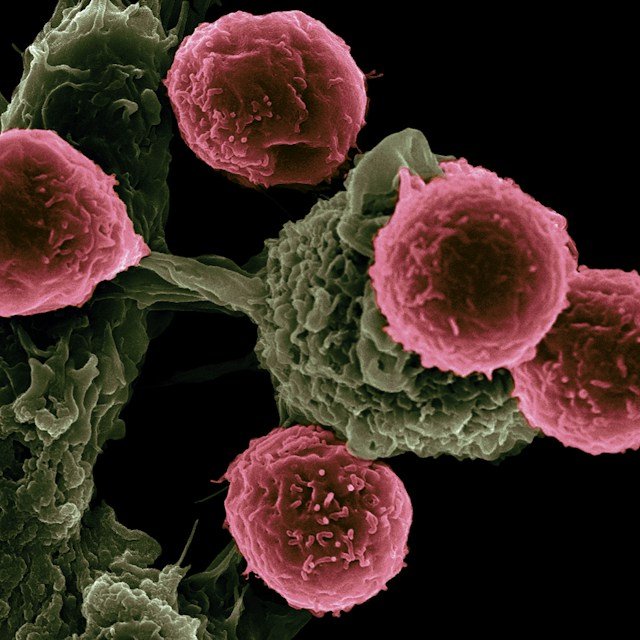
Photo by National Cancer Institute on Unsplash
About Wellcore Weekly: Wellcore Weekly covers health, wellness, nutrition, sleep, fitness, and medical research with timely, easy-to-understand updates for everyday readers.