
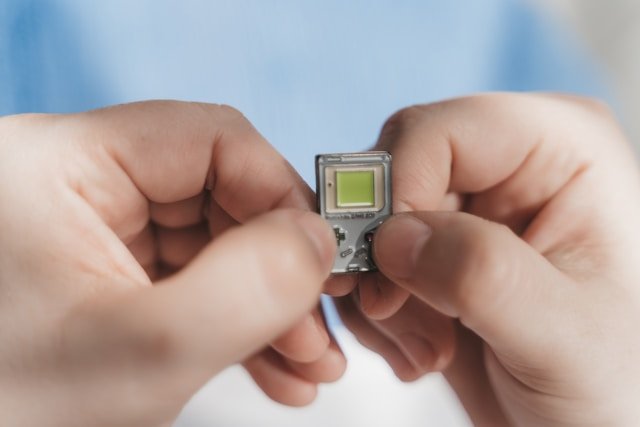
Microchip Implants Under the Skin What You Should Know Before Considering One
Unlocking your front door with a wave of your hand or sharing emergency contact information without reaching for your phone may sound futuristic, but for a growing number of people, it’s already a reality.
Subdermal microchip implants—tiny devices inserted beneath the skin—have gained attention in countries like Sweden, where some individuals use them for everyday tasks such as accessing buildings, storing digital business cards, or interacting with compatible devices.
As interest in biohacking grows, healthcare professionals are encouraging people to look beyond the technology itself and consider the medical aspects of placing an electronic device inside the body.
What Is a Subdermal Microchip?
A subdermal microchip is a small device, roughly the size of a grain of rice, that is typically implanted beneath the skin between the thumb and index finger.
Most commonly, these chips use Near Field Communication (NFC) or Radio Frequency Identification (RFID) technology.
Depending on the device, they may store limited information such as:
- Emergency contact details
- Digital identification
- Access credentials
- Links to medical information
Importantly, these implants do not function like GPS trackers and generally do not contain an internal power source. They only operate when placed near a compatible reader.
Is the Procedure Safe?
The implantation procedure is relatively simple and usually takes only a few minutes.
However, it still involves piercing the skin, which means the same precautions used for minor medical procedures are important.
Potential short-term risks include:
- Pain or tenderness
- Swelling
- Bruising
- Bleeding
- Infection
Healthcare professionals recommend that any implant procedure be performed using sterile equipment by trained individuals who follow proper infection-control practices.
Why Infection Prevention Matters
Whenever the skin is broken, bacteria can enter the body.
One concern with implanted devices is the possibility of bacteria attaching to the surface of the implant and forming a biofilm.
Biofilms are protective layers created by bacteria that can make infections more difficult to treat than ordinary skin infections.
Although such complications are considered uncommon, they may require removal of the implant if an infection develops.
Can the Body React to the Implant?
Most commercially available implants are enclosed in medical-grade biocompatible glass designed to reduce the risk of rejection.
Even so, every implanted object triggers some response from the immune system.
In rare cases, people may experience:
- Localized inflammation
- Irritation
- Scar tissue formation
- Movement of the implant beneath the skin
Individuals considering implantation should discuss any concerns with a qualified healthcare professional, particularly if they have underlying medical conditions affecting wound healing or immunity.
What About MRI Scans?
Many people wonder whether subdermal microchips interfere with MRI examinations.
The answer depends on the specific device.
Some implants are designed to be MRI-compatible under certain conditions, while others may produce image distortion around the implant site.
Anyone with an implanted device should always inform healthcare providers before undergoing MRI or other medical imaging procedures.
Could These Chips Help in Medical Emergencies?
Supporters believe subdermal technology could eventually play a role in emergency healthcare.
Future systems may allow authorized healthcare professionals to quickly access important medical information such as:
- Severe allergies
- Current medications
- Chronic medical conditions
- Emergency contacts
However, widespread use of this technology in healthcare has not yet been established, and many practical, technical, privacy, and regulatory questions remain.
Privacy and Security Are Also Important
Beyond medical considerations, experts continue discussing how personal information stored on implanted devices should be protected.
As with any digital technology, data security and privacy remain essential considerations.
People considering implantation should understand exactly what information is stored, who can access it, and how the device is protected.
Should You Get a Microchip Implant?
For most people, subdermal microchips are a matter of personal choice rather than medical necessity.
If someone is considering an implant, experts recommend asking several questions:
- Who will perform the procedure?
- Is sterile technique being used?
- Is the device medically tested?
- Is the implant MRI-compatible?
- What happens if it needs to be removed?
- How is personal data protected?
Making an informed decision is more important than following technology trends.
Subdermal microchip implants represent an interesting intersection of technology and healthcare.
While they offer convenience for some users, they also involve minor medical risks similar to other procedures that break the skin, including infection, inflammation, and potential device-related complications.
Current evidence suggests these implants can be safe when placed using proper sterile techniques and appropriate medical guidance, but they are not without limitations.
As wearable and implantable technologies continue to evolve, health experts emphasize that safety, informed consent, and long-term research should remain the foundation of innovation.
Photo by Hitesh Dewasi on Unsplash
About Wellcore Weekly: Wellcore Weekly covers health, wellness, nutrition, sleep, fitness, and medical research with timely, easy-to-understand updates for everyday readers.