
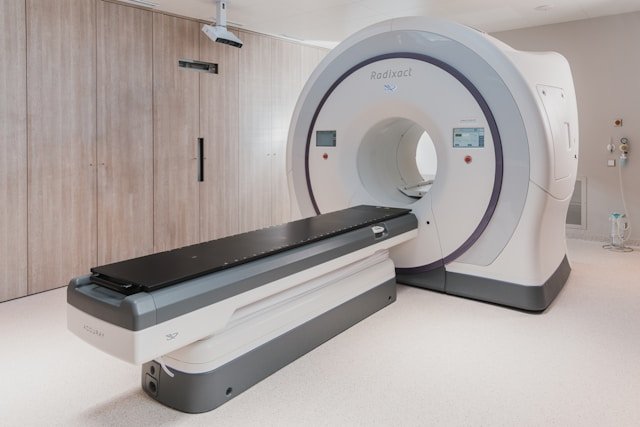
The Cold Revolution How “In-Bore” MRI Cryoablation is Erasing Tumors Without a Single Incision
For decades, the standard playbook for treating aggressive tumors embedded deep within the body has relied on brute force: cutting, stitching, and long, grueling months of recovery. But a quiet revolution is taking place in the field of oncology—one that swaps the heat of the traditional scalpel for the absolute stillness of sub-zero ice.
At the forefront of this shift is Liverpool Hospital in Sydney, which has officially deployed Australia’s first dedicated in-bore MRI-guided cryoablation system. It sounds like something pulled straight from a science fiction script: a tiny needle is inserted, compressed argon gas drops the probe’s tip to a staggering -180°C, and within seconds, a targeted tumor is literally frozen to death.
But this isn’t science fiction. It is a massive leap forward in precision medicine that is completely rewriting the patient experience.
The Power of Real-Time “In-Bore” Vision
Cryoablation—using extreme cold to destroy compromised tissue—isn’t entirely new. Doctors have used ultrasound and CT scans to guide similar procedures for years. The real paradigm shift here is the integration of in-bore MRI guidance.
Some growths are practically invisible on standard ultrasounds or CT scans. By performing the entire procedure directly inside a wide-bore MRI scanner, interventional radiologists get an ultra-high-definition, live-action view of the tissue.
Even more critically, doctors can watch the physical “ice ball” form in real time on their screens. This level of microscopic monitoring gives clinicians unprecedented control. They can push the freezing boundary right up to the millimeter mark, ensuring the tumor is entirely destroyed while completely sparing hyper-sensitive adjacent structures like the spinal cord, kidneys, or liver.
                    THE CRYOABLATION PRECISION WAVE
┌────────────────────────────────────────────────────────────────────────┐
│ [ Real-Time MRI Guidance ] ──> [ Live Target Visibility ]               │
├────────────────────────────────────────────────────────────────────────┤
│ [ Precise Argon Gas Delivery ] ──> [ -180°C Ice Ball Formed ]          │
├────────────────────────────────────────────────────────────────────────┤
│ [ Absolute Boundary Control ] ──> [ Sparing Surrounding Healthy Tissue ]│
└────────────────────────────────────────────────────────────────────────┘
From Major Orthopedic Surgery to an Outpatient Fluidity
To appreciate the sheer humanity of this technology, you only have to look at how spinal lesions were treated just a short time ago.
Historically, a patient with a painful spinal tumor faced a highly invasive, multi-hour operation. Surgeons had to slice through muscle, cut out pieces of structural bone, and install permanent metal hardware like plates and screws just to stabilize the spine. The postoperative reality? Intense trauma to the body, heavy reliance on pain management, and months of physical rehabilitation.
With MRI-guided cryoablation, that entire paradigm evaporates.
Because the entry point is nothing more than a specialized 17-gauge needle, there are no scalpels, no open wounds, and no structural compromises to the skeleton. The entire process functions as a streamlined outpatient procedure. Patients enter the clinic, undergo the session beneath the scanner, and walk out to go home the exact same afternoon.
A New Benchmark for Patient Quality of Life
The most profound impact of this technological milestone isn’t found in the engineering of the machine, but in the immediate relief it delivers to individuals. Patients who previously spent weeks unable to sit or sleep without heavy medication report waking up the morning after cryoablation with their crushing, localized pain entirely gone.
By avoiding radiation and eliminating the need for structural bone reconstruction, the procedure offers an exceptionally clean safety profile, making it a highly repeatable and elegant option for complex, recurrent, or difficult-to-reach lesions.
As medical centers worldwide continue to invest in multi-modality interventional suites, precision freezing is rapidly cementing itself as a primary pillar of modern oncology. It is a powerful reminder that sometimes, the most sophisticated path to healing isn’t the most invasive one—it’s the one that leaves the smallest footprint behind.
About Wellcore Weekly: Wellcore Weekly covers health, wellness, nutrition, sleep, fitness, and medical research with timely, easy-to-understand updates for everyday readers.