
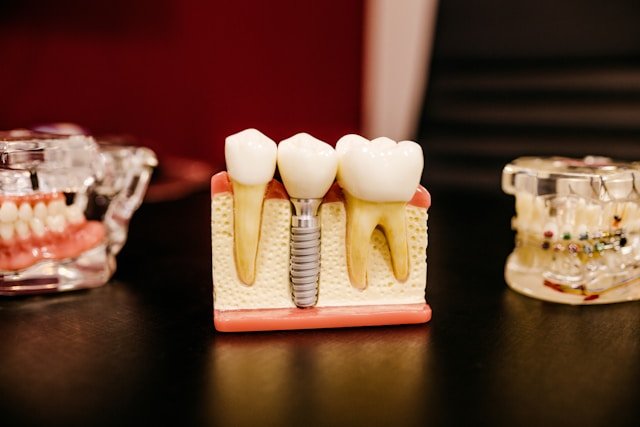
The End of Metal Implants? How Stem Cells are Grounding the Future of Regenerative Dentistry
Published: June 17, 2026
Executive Summary: Recent bioengineering trials demonstrate significant progress in growing viable, living tooth material from stem cells. Published data reveals that these lab-grown cellular structures successfully replicate natural enamel, root matrices, and complex cellular integration with surrounding vascular tissue, paving the way for a transition from synthetic implants to biological self-repair.
For over half a century, the pinnacle of restorative dentistry has relied on a fundamentally mechanical solution: drilling titanium screws directly into the jawbone or filling cavities with synthetic composites. While modern implants are highly functional, they remain foreign bodies lacking the sensory feedback, natural defense mechanisms, and cellular vitality of living tissue.
However, a profound paradigm shift is currently unfolding within regenerative medicine. Data published by researchers in ACS Macro Letters indicates that the future of dental care may bypass metallurgy entirely, opting instead to regrow authentic, living tooth structures using advanced stem cell isolation.
The Biobiological Milestone Replicating Enamel and Roots
The primary challenge in dental tissue engineering has always been the sheer complexity of tooth anatomy. Enamel is the hardest substance in the human body, organized in highly specific crystalline prisms that are notoriously difficult to mimic synthetically. Simultaneously, the root system requires an intricate interface to anchor safely within the alveolar bone.
In early-stage laboratory models, bioengineers successfully utilized stem cell populations to initiate tooth germ development. The results represent a major milestone for cellular therapies:
- Structural Fidelity: The isolated stem cells successfully differentiated into ameloblasts and odontoblasts—the highly specialized cells responsible for depositing natural enamel and dentin.
- Root Formation: The cellular matrices developed structural architecture mirroring natural root configurations.
- Vascular Integration: Crucially, the bioengineered tissue parts demonstrated the ability to form cellular connections with surrounding host tissues, a prerequisite for receiving blood flow and establishing structural stability.
The Shift from Biocompatible to Bio-Identical
From a clinical perspective, the advantages of living tissue over titanium or ceramic implants are immense. Synthetic implants, while biocompatible, do not adapt to structural changes in the jawbone over decades, occasionally leading to localized bone loss or mechanical failure.
┌────────────────────────────────────────────────────────┐
│             EVOLUTION OF DENTAL RESTORATION            │
├────────────────────────────────────────────────────────┤
│ Mechanical Fillings ──> Titanium Implants ──> Stem Cells│
│ (Foreign Material)     (Passive Fusion)       (Active) │
└────────────────────────────────────────────────────────┘
A stem-cell-derived tooth structure, by contrast, behaves exactly like natural tissue. It maintains an active cellular relationship with the immune system, possesses organic resistance to bacterial infiltration, and integrates natively with the periodontal ligament. This biological connection allows the root to absorb the subtle mechanical forces of chewing, preventing the long-term bone degradation frequently seen around rigid titanium posts.
Clinical Timelines and Regulatory Hurdles
While the technical framework achieved in these initial models is remarkably promising, significant translational hurdles remain before this technology reaches mainstream dental clinics.
Translating successful bench research into human clinical applications requires navigating complex regulatory pathways. Human trials must establish long-term safety, ensure precise control over the size and shape of the grown material, and guarantee that the tissue remains stable under chronic masticatory stress. Furthermore, the scaling of autologous stem cell harvesting—where a patient’s own cells are cultivated—presents logistical and financial complexities that researchers are actively working to streamline.
Conclusion
The era of viewing the mouth as a mechanical system to be patched with metal and plastics is gradually drawing to a close. While titanium implants will remain the standard of care for the immediate future, this breakthrough underscores a clear path toward a more sophisticated, biological methodology. Repairing the human body with its own living, adaptive tissue is no longer a concept confined to science fiction—it is the definitive future of dental science.
Primary Source & Citations:
- Stem-Cell Mediated Tooth Regeneration Models: Yelick, P. C., et al. ACS Macro Letters.
- Advanced Frameworks in Regenerative Dentistry and Tissue Engineering: International Journal of Oral Science.
Photo by Jonathan Borba on Unsplash
About Wellcore Weekly: Wellcore Weekly covers health, wellness, nutrition, sleep, fitness, and medical research with timely, easy-to-understand updates for everyday readers.