
BEYOND THE SPRAY How a Simple Color Swap Could Slash Pesticides and Clean Up Our Food Supply
For years, health-conscious consumers have played a exhausting game of defense in the grocery aisle. We meticulously scan labels for the “Organic” seal, check the “Dirty Dozen” list before buying strawberries, and spend our evenings scrubbing fresh vegetables under running water to wash away invisible chemical residues.
We know that chronic exposure to synthetic pesticides is heavily linked to disruptions in human biology, from gut microbiome damage to endocrine system imbalances.
But what if the ultimate solution to cleaner food isn’t a better vegetable wash, but a simple optical illusion deployed on the farm?
A groundbreaking study published in Scientific Reports by researchers at the University of Tokyo has revealed that swapping traditional black or white crop netting for a specific red-colored netting can decimate pest populations, cutting a farm’s reliance on chemical insecticides by up to 50%.
It is a masterful example of working with nature’s design rather than fighting it with a toxic chemical sprayer.
The Optical Defense: How Red Nets Trick Destructive Pests
To understand why this simple color swap is sending shockwaves through both the agricultural and wellness communities, you have to look at the unique visual biology of agricultural pests—specifically the onion thrip. These tiny, highly destructive insects cause millions of dollars in crop damage annually and have rapidly developed genetic resistance to common chemical sprays.
Traditionally, farmers have used ultra-fine black or white mesh to physically block these insects. However, the University of Tokyo study demonstrated that color is actually a far more potent deterrent than a physical wall.
Agricultural Netting Performance Dynamics:
┌───────────────────────────┐     ┌───────────────────────────┐
│ Traditional Fine Mesh     │ ──> │ Restricts Airflow & Light │
│ (Black/White Physical)    │     │ (Breeds Humidity & Mold)  │
└───────────────────────────┘     └───────────────────────────┘
                                                │
                                                ▼
┌───────────────────────────┐     ┌───────────────────────────┐
│ Advanced Red Netting      │ ──> │ Allows Massive Airflow    │
│ (Optical Deterrent Hack)  │     │ (Cuts Insecticides 50%)   │
└───────────────────────────┘     └───────────────────────────┘
Because of the specific way an insect’s compound eyes perceive light wavelengths, onion thrips view the color red as a massive, impenetrable obstacle. When flying toward a crop protected by a red net, the insect’s brain registers the color as a “keep away” signal.
Because the defense mechanism is entirely psychological and optical rather than physical, the holes in the netting can actually be made significantly larger.
The Real-World Systemic Benefits
The biological chain reaction triggered by this larger, color-optimized mesh solves several systemic farming dilemmas simultaneously, directly impacting the quality of the food that lands on your dinner plate.
| Performance Metric | Traditional Ultra-Fine Mesh (Black/White) | Advanced Red-Colored Netting |
| Pesticide Dependency | High; pests frequently breach standard mesh, requiring chemical backup. | Reduced by 25% to 50% due to highly superior optical deterrence. |
| Greenhouse Air Ventilation | Poor; tight holes choke airflow, driving up internal working temperatures. | Excellent; wider holes permit natural breezes, protecting farmworkers. |
| Microbial Disease Risks | High; trapped humidity creates a breeding ground for crop mold and fungi. | Low; optimal evaporation rates significantly reduce fungal infections. |
In rigorous field trials, crops grown under the red optical shield required half the chemical interventions of traditional fields, providing an immediate path toward truly sustainable, low-toxicity agriculture.
Opinion: It’s Time to Move Past the Era of Chemical Dependency
For nearly a century, industrial agriculture has operated under a single, brute-force paradigm: if an insect eats a crop, spray it with poison. We have doused our food supply in synthetic neurotoxins, only to watch in frustration as insects develop rapid evolutionary resistance, forcing chemical companies to manufacture even harsher formulas.
This constant chemical escalation is an absolute disaster for human metabolic and neurological health.
What makes the University of Tokyo’s research so profoundly exciting is that it completely shifts the paradigm from chemical warfare to behavioral engineering. It proves that by understanding the sensory biology of the pests we fight, we can design elegant, passive infrastructure solutions that completely eliminate the need for toxic interventions.
Transitioning to optical pest control isn’t just an engineering victory for growers; it is a major win for preventative human medicine. As a consumer base, we must demand that our supply chains adopt these common-sense, bio-compatible technologies. True food safety doesn’t happen at the kitchen sink—it begins with the light hitting the crop on the farm.
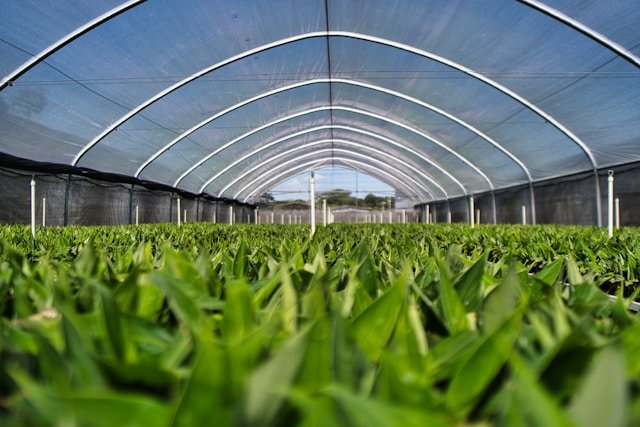
Photo by Héctor Emilio Gonzalez on Unsplash
About Wellcore Weekly: Wellcore Weekly covers health, wellness, nutrition, sleep, fitness, and medical research with timely, easy-to-understand updates for everyday readers.