
THE 30-YEAR RESET How Scientists Cracked the Code to Make Old Human Cells Act Young Again
For generations, the anti-aging market has been built on a foundation of clever marketing, expensive moisturizers, and superficial cover-ups. We’ve been conditioned to accept that aging is a one-way street—a slow, inevitable decline that we can only hope to mask with cosmetic tricks.
But a groundbreaking study published in eLife has just flipped that entire narrative on its head.
An international team of researchers has achieved what was long considered a holy grail in regenerative medicine: they took old human skin cells and biologically rolled back their internal clocks by a staggering 30 years.
We aren’t talking about making skin look a little smoother under a microscope. We are talking about fundamentally altering the molecular blueprint of the cells so that an individual’s skin tissue behaves, repairs, and functions exactly like it did three decades ago.
The Yamanaka Paradox: The Fine Line Between Youth and Chaos
To understand why this is a massive leap forward, you have to look at the tool the scientists used: Yamanaka factors. Discovered in 2006, these are a specific group of four master proteins that possess the almost magical ability to completely wipe a cell’s memory, reverting any adult cell back into a blank-slate embryonic stem cell.
But using Yamanaka factors for anti-aging has historically presented a terrifying paradox. If you expose an old skin cell to these proteins for too long, it completely loses its identity. It forgets it’s a skin cell, stops producing collagen, and turns into an unregulated stem cell—a recipe that can easily trigger tumor growth in living tissue. It was like erasing an entire hard drive just to fix a single corrupted software file.
The brilliant twist in this new research? The scientists figured out how to hit the pause button.
Instead of letting the reprogramming run its full course, the team stopped the process at precisely 13 days. This window, termed Maturation Phase Transient Reprogramming (MPTR), turned out to be the absolute sweet spot. It was just long enough to peel away decades of accumulated biological wear-and-tear, but brief enough that the cells retained their fundamental identity. When the smoke cleared, they were still skin cells—they were just incredibly young skin cells.
The Proof is in the Collagen
The results of this biological time-travel were nothing short of spectacular.
When the researchers analyzed the rejuvenated cells, the molecular patterns matched those found in individuals 30 years younger. But more importantly, the cells acted the part:
- Collagen Factory Restored: The treated cells produced massive, youthful amounts of collagen—the essential structural protein that gives skin its elasticity and prevents it from thinning or wrinkling as we age.
- Rapid Healing: In laboratory wound-healing tests, the rejuvenated cells migrated into damaged areas and repaired tissue significantly faster than their untreated, aged counterparts.
This Goes Way Beyond Wrinkles
The mainstream media will undoubtedly frame this breakthrough as the ultimate cure for wrinkles, but that completely misses the grander scale of what has been accomplished here.
The true value of this technology isn’t cosmetic; it’s clinical. If we can safely roll back the biological clock of skin cells without erasing their identity, we can use this exact same framework to rejuvenate heart tissue, liver cells, and neurological pathways. It opens the door to a future where we don’t just treat age-related diseases like Alzheimer’s, heart failure, or macular degeneration—we prevent them entirely by keeping our tissues biologically young.
Yes, the research is still confined to the laboratory, and it will be years before this kind of transient reprogramming is ready for human therapies. But the conceptual barrier has been permanently broken. Aging is no longer an irreversible law of physics; it’s a biological program—and we’ve finally figured out how to rewrite the code.
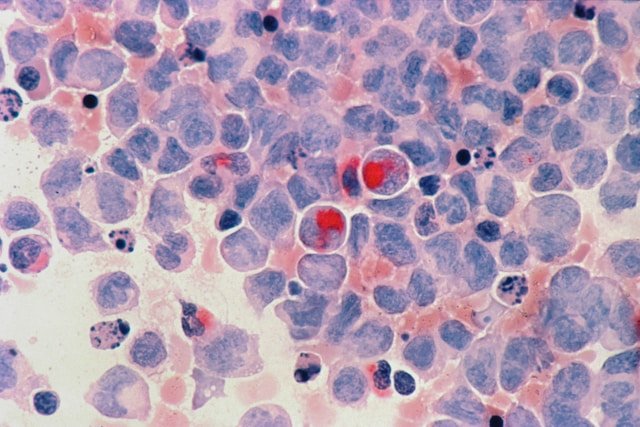
Photo by National Cancer Institute on Unsplash
About Wellcore Weekly: Wellcore Weekly covers health, wellness, nutrition, sleep, fitness, and medical research with timely, easy-to-understand updates for everyday readers.