
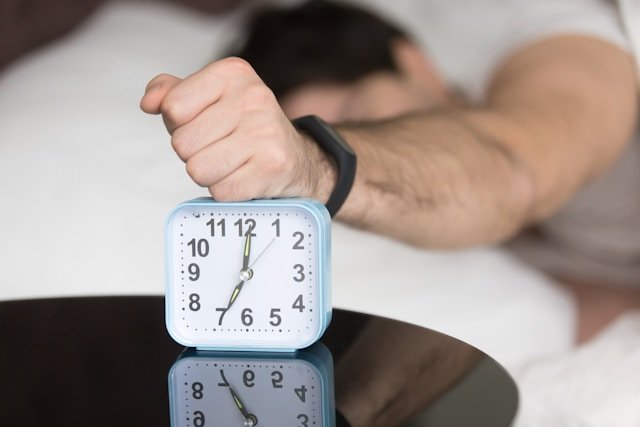
The Tardiness Paradox: Why Chronically Late People Might Just Have Life Figured Out
We’ve all been on both sides of it. You’re sitting at a restaurant table, staring at your phone, wondering if your friend got lost in a parallel universe. Or, you’re the one frantically speeding down the highway, sweating through your shirt, rehearsing your apology for being 15 minutes late—again.
Society has a pretty harsh verdict on chronic lateness: we label it as rude, lazy, or disorganized.
But what if we’ve been looking at it completely wrong?
A fascinating wave of psychological research suggests that frequently running late isn’t a character flaw at all. In fact, it might actually be a byproduct of a highly creative, wildly optimistic, and statistically more successful mind. So before you beat yourself up over your terrible time management, let’s look at the science of why your brain operates on its own timezone.
The 77-Second Minute: How Type B Brains Warp Time
To understand chronic lateness, we have to look at personality theory. Most chronically late people fall squarely into the Type B personality category. Where Type A individuals are highly competitive, organized, and clock-watching, Type B folks tend to be relaxed, imaginative, and deeply open-minded.
And as it turns out, these two groups literally experience reality differently.
A famous study by psychologist Jeff Conte tested how Type A and Type B individuals perceive time. He asked participants to guess when exactly 60 seconds had passed without looking at a clock.
- Type A personalities guessed, on average, at around 58 seconds.
- Type B personalities didn’t think a minute had passed until 77 seconds had ticked by.
Think about that math. If your internal clock perceives a minute as being nearly 20 seconds longer than it actually is, you are biologically wired to underestimate how long a drive, a shower, or an email reply will take. You aren’t trying to be disrespectful; your brain is quite literally lagging behind the actual clock.
The Multi-Tasking Over-Optimist
The second major driver of lateness is a lethal combination of two traits: chronic optimism and a tendency to multitask.
Chronically late people are usually toxic optimists when it comes to scheduling. They genuinely believe they can leave the house at 8:45, drive across town, grab a coffee, find parking, and walk into an 8:50 meeting on time. They plan for the absolute best-case scenario every single time.
While this makes them terrible at logistics, this exact flavor of optimism is a massive predictor of long-term success. Research shows that high-level optimists tend to be far more resilient, enjoy longer life expectancies, and—in corporate settings—make up to 88% more sales than their pessimistic, perfectly punctual peers.
Furthermore, running late is often a sign of an incredibly active, idea-driven mind. Look at creative powerhouses like Ashton Kutcher, who successfully juggles acting, high-stakes tech investing, and running media ventures. When you are a creative multitasker, your brain is constantly chasing a thread of inspiration. You stay in the zone just a little bit longer to finish that thought, fix that problem, or send that final pitch. You don’t live your life by a rigid grid; you live it by flow.
A Little Grace for the Chronically Tardy
Look, let’s not completely sugarcoat it: showing up late to a job interview or a wedding is still a bad look. It causes friction, and it stresses people out. If you’re late, you still owe your friends an apology (and maybe a round of drinks).
But it’s time to retire the narrative that lateness equals laziness.
The people who view time loosely are often the same people who don’t sweat the small stuff, who think outside the box, and who bring the most vibrant energy to the table once they finally arrive. The next time you find yourself running 10 minutes behind, take a deep breath and give yourself some grace. You aren’t broken—your brain is just busy being creative.
Photo by Solving Healthcare on Unsplash
About Wellcore Weekly: Wellcore Weekly covers health, wellness, nutrition, sleep, fitness, and medical research with timely, easy-to-understand updates for everyday readers.