
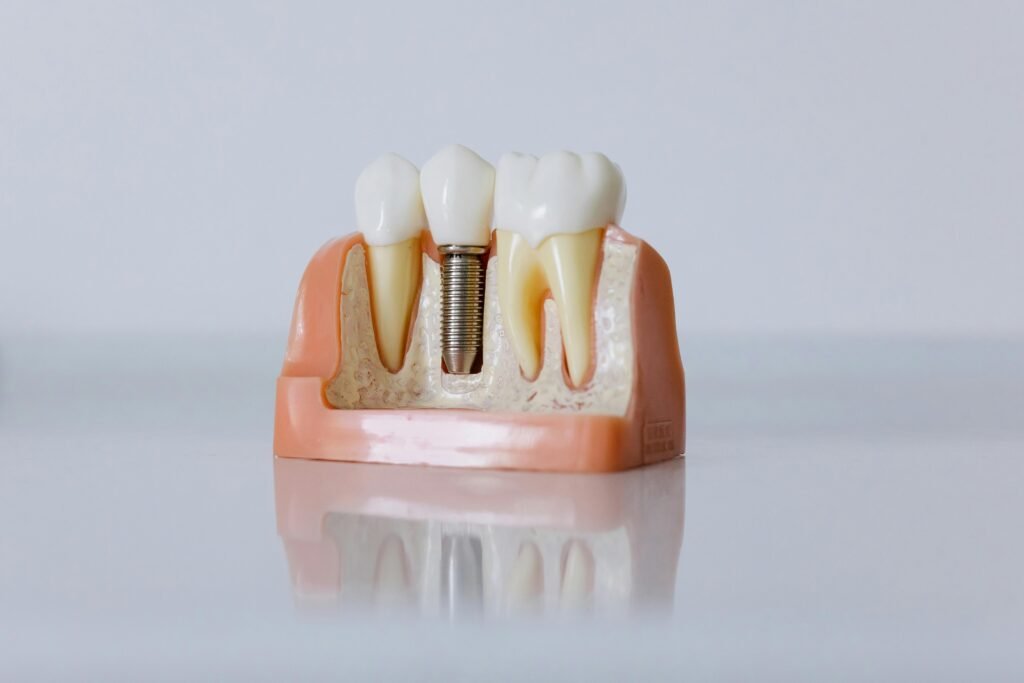
The “Smart Tooth” Everyone’s Talking About—What’s Real and What’s Not
A Viral Claim That Sounds Too Good to Be True
You may have seen it online: a “smart” dental implant that grows into your gums, connects to nerves, and works just like a real tooth—no screws, no surgery as we know it.
It sounds incredible. Almost futuristic.
But here’s the truth: that exact technology doesn’t exist in real-world dentistry—at least not yet.
Where the Story Gets Exaggerated
The idea of a fully “living” tooth implant—one that naturally fuses with your body and restores sensation like temperature or pressure—is still in the experimental stage.
There’s no approved treatment today that can:
- Fully reconnect to your natural nerve system
- Restore real tooth sensation
- Replace a tooth with a completely biological, self-integrating structure
So while the headlines are exciting, they’re jumping ahead of the science.
What Science Is Actually Achieving
That said, dentistry is evolving fast—and some of the real progress is genuinely impressive.
Researchers in Regenerative Dentistry are working on ways to repair or even regrow parts of teeth using biological methods.
Current advancements include:
- Improved dental implants that integrate more naturally with bone
- Early-stage research on growing tooth-like structures
- Tissue engineering to regenerate gum and dental support structures
This is real science—but it’s still developing.
Why “Living Teeth” Are So Difficult
Creating a true biological replacement for a tooth is incredibly complex. A natural tooth isn’t just a hard structure—it’s a living system connected to nerves, blood supply, and surrounding tissue.
To replicate that, scientists would need to rebuild:
- Nerve connections
- Blood vessels
- Structural layers like enamel and dentin
That’s a much bigger challenge than simply placing a traditional implant.
A Reality Check (Let’s Be Honest)
It’s easy to get caught up in viral health claims—especially when they promise something revolutionary. But in this case, the “smart tooth” idea is more future possibility than present reality.
That doesn’t mean it’s fake science—it just means it’s not ready for clinics, patients, or everyday use.
Where Dentistry Is Actually Headed
The future of dental care is likely to move toward more natural, biology-based solutions. Instead of replacing teeth with artificial materials, the goal is to help the body repair or regenerate its own structures.
Organizations like the National Institute of Dental and Craniofacial Research are actively exploring these possibilities, but they also make it clear: this work is still in progress.
Final Thought
The idea of a fully functional, nerve-connected replacement tooth is exciting—and it may one day become real. But right now, it’s a glimpse of where science is going, not where it is.
So the next time you see a viral “breakthrough,” it’s worth asking:
Is this happening now—or is it just a preview of the future?
Sources
- National Institute of Dental and Craniofacial Research. Regenerative dentistry research overview.
About Wellcore Weekly: Wellcore Weekly covers health, wellness, nutrition, sleep, fitness, and medical research with timely, easy-to-understand updates for everyday readers.