
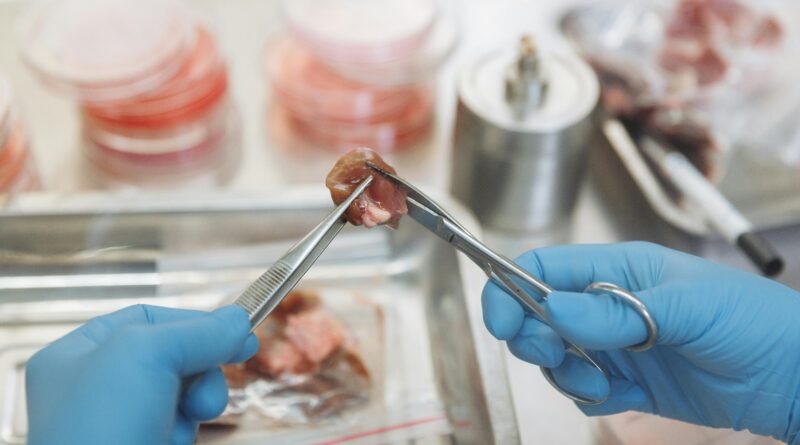
The Future of Transplants Is Being Built in the Lab
Imagine a world where patients no longer have to wait years for an organ transplant. Scientists around the globe are working toward that reality by developing lab-grown organs, a groundbreaking innovation that could transform modern medicine.
Millions of people worldwide suffer from organ failure, yet the number of available donor organs is far lower than the number of patients who need them. This shortage has pushed researchers to explore new ways of creating replacement tissues—and one of the most promising solutions is the development of organoids, miniature organs grown in laboratories.
🧪 What Are Lab-Grown Organs?
Lab-grown organs are often created using stem cells, special cells capable of transforming into many different types of tissue. Scientists place these cells in controlled laboratory environments and provide the chemical signals they need to grow and organize into structures that resemble real organs.
These structures—called organoids—are three-dimensional miniature versions of organs such as the brain, liver, intestines, and kidneys. While they are smaller and simpler than full organs, they can mimic key biological functions and structures of real tissues.
🔬 Why This Breakthrough Matters
Lab-grown organs could solve several major challenges in medicine:
1. Reducing Organ Shortages
Patients waiting for heart, kidney, or liver transplants often spend years on waiting lists. Growing organs in labs could dramatically reduce this shortage.
2. Safer Drug Testing
Organoids allow scientists to test medications on human-like tissues instead of relying solely on animal experiments. This helps researchers better predict how drugs will affect humans.
3. Studying Diseases More Accurately
Researchers can grow organoids from a patient’s own cells to study how diseases develop and to test treatments tailored to that individual.
❤️ Real Progress Is Already Happening
Recent breakthroughs show how quickly this technology is advancing. Scientists have developed miniature heart models that even show early blood-vessel structures, helping researchers better understand how the heart develops and responds to treatments.
These advances demonstrate that lab-grown organs are becoming increasingly complex and realistic, bringing researchers closer to the goal of creating fully functional transplant able organs.
⚠️ Challenges Still Ahead
Despite the excitement, scientists still face important challenges:
- Growing organs large enough for transplantation
- Developing proper blood vessels and tissue connections
- Ensuring organs function exactly like natural ones
Researchers are also carefully addressing ethical questions as the technology continues to evolve.
🌍 A Medical Revolution in the Making
Lab-grown organs represent one of the most exciting frontiers in modern medicine. If scientists succeed in developing fully functional organs for transplantation, the impact could be enormous—saving millions of lives and transforming healthcare systems around the world.
What once sounded like science fiction is slowly becoming reality. In laboratories today, researchers are laying the foundation for a future where life-saving organs can be grown, personalized, and delivered to patients who need them most.
Photo by Thirdman :
About Wellcore Weekly: Wellcore Weekly covers health, wellness, nutrition, sleep, fitness, and medical research with timely, easy-to-understand updates for everyday readers.