
Posture and Hydration Separating Medical Fact From Viral Wellness Myths
In the digital wellness space, viral health trends frequently resurrect age-old cultural beliefs, wrapping them in modern scientific terminology to create a sense of urgency. A prominent example currently circulating across social media channels is the assertion that individuals should never consume water while standing up.
According to these claims, drinking fluid while on your feet forces water down the digestive tract under intense gravitational pressure, supposedly bypassing gastric filtration, causing structural joint damage, and preventing proper nutrient absorption.
However, when evaluated against established human anatomy and gastrointestinal physiology, the medical consensus remains clear: the human body is highly adapted to process fluids efficiently, regardless of whether you are sitting, standing, or moving. Understanding the actual mechanics of hydration can help individuals separate harmless behavioral habits from rigid pseudo-scientific myths.
The Anatomy of Hydration: How the Body Processes Fluid
To understand why physical posture has zero impact on cellular fluid absorption, it is necessary to examine the physical path water travels through the human gastrointestinal (GI) tract. The body utilizes a highly regulated, involuntary muscular process that operates completely independently of gravity.
When you take a sip of water, the fluid does not simply “drop” down an open tube into your organs. Instead, it moves through the following physiological stages:
$$\text{Ingestion} \longrightarrow \text{Peristalsis (Esophagus)} \longrightarrow \text{Gastric Accommodation (Stomach)} \longrightarrow \text{Intestinal Absorption}$$
- Peristalsis: The esophagus utilizes rhythmic, coordinated muscular contractions called peristalsis to move solids and fluids downward. This mechanism is so powerful that it functions perfectly even if an individual is completely inverted.
- Gastric Retention: Upon entering the stomach, fluids are held by the muscular walls and systematically metered out into the small intestine via the pyloric sphincter. The stomach does not act as a passive funnel; it acts as a reservoir that regulates transit volume.
- Renal Filtration: The renal system (kidneys) filters metabolic waste directly from the bloodstream, not from the raw water sitting in your stomach. Fluids must first be absorbed through the intestinal walls into the vascular system before reaching the kidneys.
Because these internal systems rely entirely on osmotic pressure, systemic blood flow, and involuntary smooth muscle tissue, your skeletal posture does not alter the bioavailability of the water you consume.
The True Source of Gastrointestinal Discomfort
While the extreme claims regarding joint pain and kidney failure lack empirical scientific backing, there is a minor behavioral reason why some individuals experience mild indigestion when drinking while standing. The issue, however, is caused by pacing, not posture.
When people consume water while standing or on the move, they are statistically more likely to chug the fluid rapidly due to being in a rushed environment.
[Rushed Standing Environment] ──> Rapid Gulping ──> Aerophagia (Swallowed Air) ──> Transient Bloating
Gulping down large volumes of liquid too quickly causes a condition known as aerophagia—the accidental swallowing of excess air. This accumulation of air pockets within the gastric cavity is the actual cause of the sudden fullness, mild cramping, or transient bloating that individuals mistakenly attribute to their upright posture.
Constructive Habits for Optimal Hydration
If you struggle with mild gastrointestinal sensitivity or bloating during exercise, adjusting your behavioral approach to fluid intake can enhance physical comfort. Consider implementing the following structured habits:
1.Transition to Measured Sips:Pacing Control.
Instead of rapidly chugging an entire glass of water after exertion, consume the fluid in smaller, measured intervals. This allows the stomach lining to expand gradually without triggering a localized muscle spasm.
2.Calibrate Fluid Temperature:Temperature Moderation.
Avoid consuming large quantities of ice-cold water during periods of elevated core temperature. Opt for cool or room-temperature water to minimize the risk of a sudden thermal shock to the highly vascular gastric mucosa.
3.Incorporate a Behavioral Rest:Mindful Pausing.
While sitting isn’t anatomically mandatory for water absorption, taking a brief, seated intermission forces you to slow down your breathing, naturally regulating your drinking pace and preventing aerophagia.
Comparative Analysis: Fact vs. Myth
| Claimed Postural Effect | Viral Wellness Myth | Verified Medical Reality |
| Gastrointestinal Transit | Water bypasses the stomach entirely when standing. | Peristalsis and the pyloric valve strictly regulate transit regardless of posture. |
| Renal / Kidney Impact | Standing prevents proper filtration of fluids. | Kidneys filter fluids continuously from the bloodstream via osmotic pressure. |
| Skeletal / Joint Health | Posture causes water to pool in joints, causing arthritis. | Water is absorbed into the blood and distributed evenly at a cellular level. |
| Primary Risk Factor | The physical angle of the spine and legs. | Rapid ingestion pacing leading to excess swallowed air. |
At the end of the day, prioritizing consistent, adequate daily hydration is vastly more important than worrying about your physical posture at the water cooler. Your body is an incredibly sophisticated machine designed to keep you balanced, whether you are standing up, sitting down, or on the run. If taking a seat helps you slow down and drink more mindfully, it is a great habit to keep—just leave the pseudo-science behind.
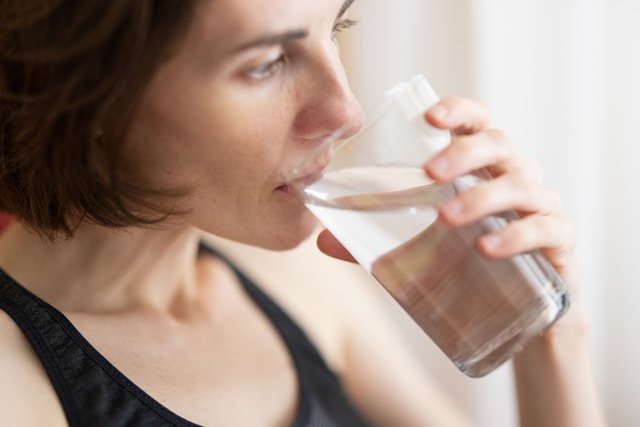
Photo by engin akyurt on Unsplash
About Wellcore Weekly: Wellcore Weekly covers health, wellness, nutrition, sleep, fitness, and medical research with timely, easy-to-understand updates for everyday readers.