
The End of the Fused Spine? Why Your Next Back Treatment Might Be a Gel, Not a Surgeon
If you live with chronic back pain, you know the “fusion talk.” It’s that sobering moment with a specialist where they explain that the only way to fix your agonizing disc degeneration is to permanently bolt your vertebrae together.
It’s effective for pain, sure—but it’s also the end of your natural flexibility.
But what if, instead of a welder’s approach to the spine, we used a gardener’s? Scientists are currently perfecting a “biological cushion” in the form of injectable hydrogels. It’s a shift from masking the pain to actually regrowing the support, and it could change everything for millions of us as we age.
The “Mechanical Mimic”: How the Gel Works
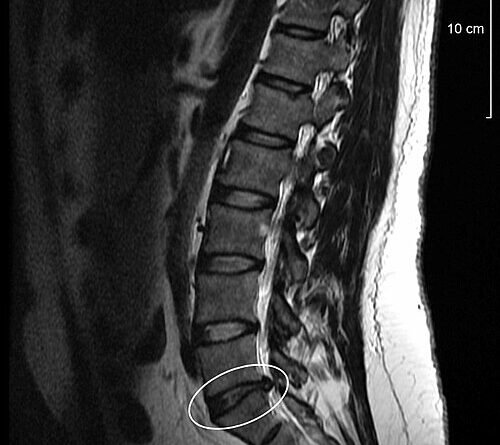
Our spinal discs are basically the body’s shock absorbers. Over time, these pads wear thin, leak, or flatten out, leaving nerves to bear the brunt of every step we take.
Enter injectable hydrogels. These aren’t just simple fillers; they are high-tech materials engineered to mimic the exact “squish” and mechanical strength of a healthy human disc.
- The Filling: The gel fills the cracks and voids in a damaged disc.
- The Cushion: It restores the space between vertebrae, physically lifting the pressure off those screaming nerves.
- The Seed: The most advanced versions act as a “scaffold,” carrying stem cells or growth signals that tell your body, “Hey, let’s actually repair this tissue.”
Why I’m Rooting for the Hydrogel (And You Should Too)
Let’s be opinionated for a second: Spinal fusion is an 18th-century solution for a 21st-century body. We move more, live longer, and demand more from our spines than ever before. Permanently joining vertebrae (fusion) often leads to “adjacent segment disease,” where the discs above and below the fusion wear out twice as fast because they’re doing all the work.
Regenerative hydrogels offer a “Less is More” philosophy. If we can preserve the spine’s natural “bounce” through a needle rather than a scalpel, we aren’t just fixing a back; we’re preserving a lifestyle.
The Reality Check: Don’t Cancel Your Physical Therapy Yet
As much as we want this at our local clinic tomorrow, we have to respect the process.
- The Lab Stage: Most of this success has been in animal studies and early-stage human trials.
- The Durability Question: A hydrogel has to survive decades of walking, jumping, and sitting. We need to know it won’t break down or shift under pressure over the long haul.
- The Waiting Game: Larger clinical trials are still in the works to prove these gels are as safe as they are “cool.”
We are moving away from an era of “management” and into an era of “restoration.” The idea that we could essentially “re-inflate” a worn-out spine with a biological gel is no longer science fiction—it’s the next frontier.
For the millions of people waking up with a stiff, aching back, the message is clear: hang in there. The future of spinal health isn’t just about stopping the pain; it’s about getting your movement back.
About Wellcore Weekly: Wellcore Weekly covers health, wellness, nutrition, sleep, fitness, and medical research with timely, easy-to-understand updates for everyday readers.